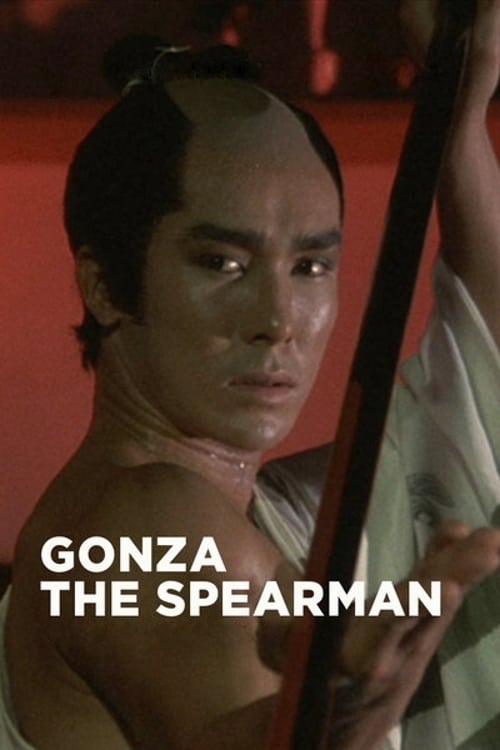
Gonza the Spearman
1986
No user ratings available yet
Diversity score: 4.1 out of 10

1964
NRDirector
Masahiro Shinoda
Runtime
104 minutes
Average Rating
No ratings yetSynopsis
Assassination begins with the events of 1853 when "four black ships" anchored at Edo Bay, sparking civil unrest and the major political manoeuvring that saw the end of the Tokugawa Shogunate. At a time when assassination had become a disturbing political tool, Shinoda's film follows Hachiro Kiyokawa, an ambitious, masterless samurai whose allegiances drift dangerously between the Shogunate and the Emperor.
Overall Score
Limited
Category Breakdown
LGBTQ+ Representation
The film lacks identifiable LGBTQ+ characters or depictions of non-cisnormative identities. The narrative remains strictly within the socio-political framework of the 19th-century samurai class.
Gender Representation
Male political maneuvering and the martial code of the ronin dominate the narrative. Female characters are largely relegated to domestic spheres or subordinate social positions, reinforcing traditional hierarchies.
Racial & Ethnic Diversity
The film maintains cultural homogeneity, which is accurate to the era's demographic reality. It avoids whitewashing but does not use intersectional casting to disrupt the historical status quo.
Religious & Cultural Diversity
The narrative critiques the dehumanizing nature of feudal power and the rigidity of established authority. It portrays the Shogunate as an oppressive, inescapable structure that stifles individual agency.
Disability Representation
There is no significant evidence of characters with visible or invisible disabilities being utilized as central narrative drivers or explored through a lens of agency.
Strengths
Areas for Improvement
AI Analysis
Assassination is a period piece that prioritizes historical authenticity and political critique over modern demographic diversity. While the cast and setting reflect the cultural homogeneity of 19th-century Japan, the film's true depth lies in its intellectual subversion of the feudal order. The narrative architecture focuses heavily on male-driven political conspiracies and the martial code. This results in low scores for gender and LGBTQ+ representation, as women and non-cisnormative identities are absent from the central power struggles. Ultimately, the film functions as a critique of systemic tyranny. It uses the breakdown of social order to dismantle the myth of an honorable feudal system, offering a sophisticated look at the futility of rebellion against an oppressive state.
1986

1989

1965
1967

1987
1969

1955
1957
1959
1965

2018
2012
No reviews yet. Be the first to share your thoughts on this movie!
Use the rating form above to leave a star rating and optional review.