
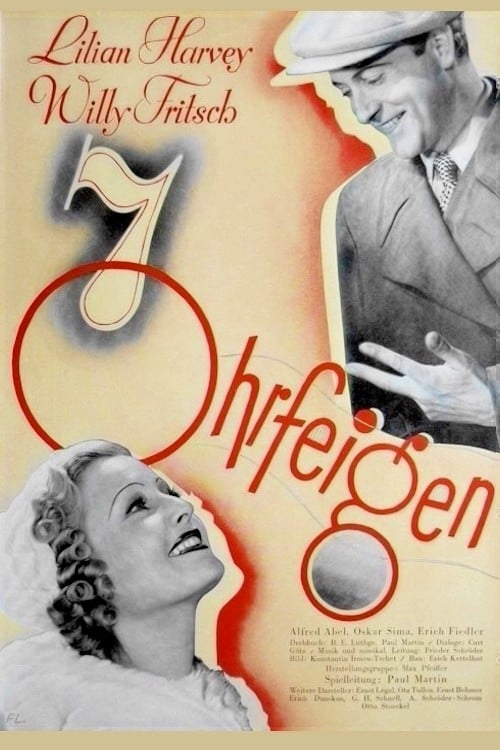
Hard to Get
1938
No user ratings available yet
Representation score: 0.6 out of 10
Representation Score
Minimal
1937
PassedDirector
Paul Martin
Runtime
96 minutes
Average Rating
No ratings yetNew Showbiz Analysis
Seven Slaps is a conventional 1930s comedy that prioritizes escapist entertainment over social depth. The plot revolves around a personal vendetta involving stock market manipulation and slapstick retribution, keeping the focus on a narrow, monocultural social circle. The film strictly adheres to the era's standard narrative structures. While the female lead engages with the plot, the driving forces of the conflict and the romantic resolution remain firmly rooted in traditional gender and social structures. Ultimately, the film offers little in the way of diverse representation. It functions as a localized, character-driven comedy that reinforces the status quo of its time rather than challenging it.
Category Breakdown
The film does not include any LGBTQ+ characters or non-cisgender identities. The romantic storyline focuses solely on a traditional heterosexual relationship between MacPhab and Daisy.
Daisy shows wit by finding amusement in the central conflict, but the main roles belong to male characters. The plot follows typical romantic comedy clichés without challenging traditional gender hierarchies.
The narrative seems to center around a homogeneous social group. There is no indication of a multi-ethnic cast or the inclusion of diverse racial identities within the story.
The film upholds conventional social norms through a lens of personal comedy. It operates within traditional Western values, focusing on individual grievances rather than systemic critiques.
There is no mention of characters with visible or invisible disabilities. The narrative does not address disability in any way.
Present on Screen
Limited or Absent
Official Synopsis
William MacPhab loses seven-pounds in the stock market and decides to slap the man who was responsible for the stock manipulation that caused him to lose his money. Astor Terbanks, the stock-market manipulator is surprised the next day when he gets soundly slapped by MacPhab, and the latter promises to deliver one more a day for the next six days. Terbank's daughter, Daisy, is amused by the procedure and is attracted to MacPhab.
1938
1926
1925
1941
1928

1936

1926

1942
No reviews yet. Be the first to share your thoughts on this movie!
Use the rating form above to leave a star rating and optional review.