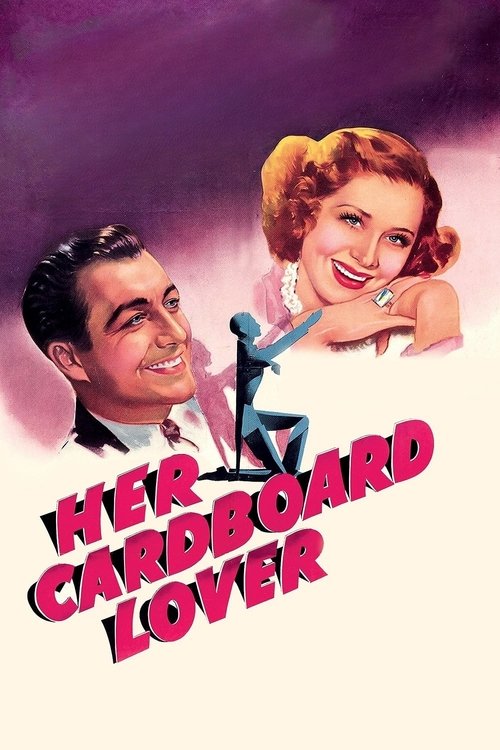
Her Cardboard Lover
1942
No user ratings available yet
Representation score: 0.8 out of 10
Representation Score
Limited
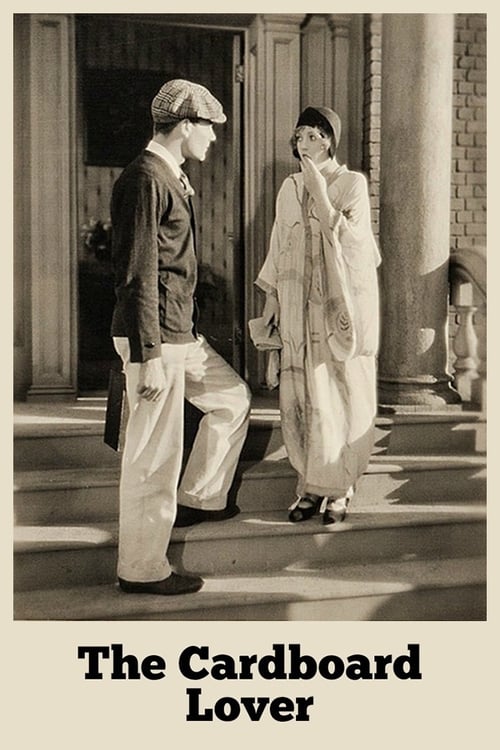
1928
Director
Robert Z. Leonard
Runtime
77 minutes
Average Rating
No ratings yetNew Showbiz Analysis
The Cardboard Lover functions as a conventional silent-era romantic comedy that upholds the social status quo. It relies heavily on established clichés, particularly regarding gender and class, rather than offering any systemic subversion. The film's narrative structure revolves around a standard heterosexual courtship. This focus, combined with the use of the 'ditzy' female archetype, limits the depth of its character representation and social commentary. While the setting is international, the story remains rooted in Western romantic ideals. The lack of diverse casting suggests a production that adheres strictly to the mainstream Hollywood standards of 1928.
Category Breakdown
The film centers on a traditional heterosexual romance where the main character seeks to reclaim a lost relationship from a two-timing fiancé, reinforcing straight-centered standards.
The female lead is portrayed as 'ditzy,' relying on the cliché of intellectual inferiority for comedic effect. She does play a significant role in pursuing the male lead, but the plot reinforces traditional gendered power dynamics.
Set in Monte Carlo, the film suggests a cosmopolitan environment, yet the narrative follows standard Western structures centered around white protagonists, adhering to early Hollywood casting conventions.
The narrative celebrates high-society social rituals and Western romantic ideals. It focuses on courtship and social maneuvering without critiquing Western institutions or social hierarchies.
There are no visible or invisible disabilities portrayed in the film. No characters are identified as having physical disabilities, neurodivergent traits, or mental health conditions.
Present on Screen
Limited or Absent
Official Synopsis
A ditzy American girl visiting Monte Carlo is hired by a tennis champ to be his "cardboard lover"--to pretend to be in love with him so he can teach his two-timing fiancé a lesson and win her back. What he doesn't realize is that the girl isn't pretending --she actually is in love with him, and she sets out to win him for herself.
1942
1926
1927

1934
1926

1938
1932
1927
No reviews yet. Be the first to share your thoughts on this movie!
Use the rating form above to leave a star rating and optional review.