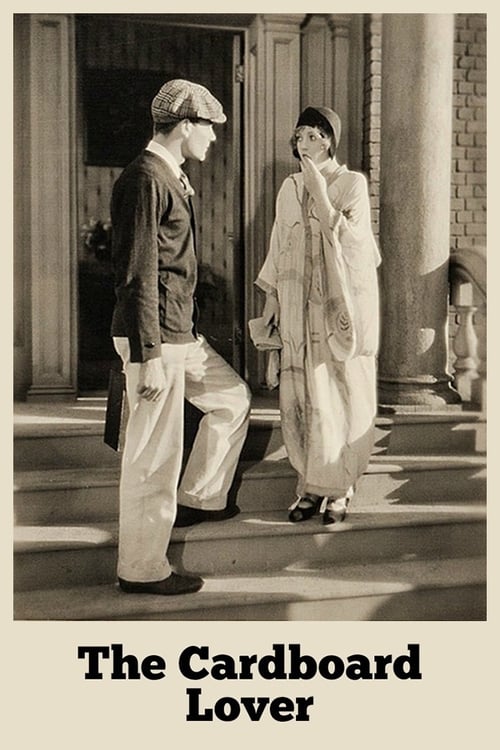
The Cardboard Lover
1928
No user ratings available yet
Representation score: 2.3 out of 10
No Poster Available
Representation Score
Minimal
1928
PassedDirector
George B. Seitz
Runtime
70 minutes
Average Rating
No ratings yetNew Showbiz Analysis
Hey Rube! is a conventional silent-era romantic comedy that relies heavily on established early 20th-century clichés. The narrative follows a predictable trajectory where a male protagonist performs a chivalrous act to win a woman's favor, ultimately leading to his moral redemption. While the film offers a clear character arc regarding the protagonist's decision to abandon gambling, it does so through a lens of traditional social hierarchies. The female lead primarily serves as a stabilizing force for the male lead rather than as an independent agent. Ultimately, the film reinforces the period's standard social and moral frameworks. It lacks the complexity or intentionality needed to challenge the era's dominant cultural or gendered norms.
Category Breakdown
The film adheres to a traditional romantic structure focused solely on heterosexual relationships between String Whalen and Lutie.
Lutie plays a significant role in the male protagonist's moral transformation. Although she has some ability to act, the story mainly focuses on the male lead's journey.
The film seems to follow the homogeneous casting standards typical of its time. There is no indication of a diverse cast or non-Anglo-Saxon actors.
The story emphasizes traditional moral values and personal reform. It rewards the abandonment of vice in favor of conventional social stability.
The film does not include any characters with visible or invisible disabilities.
Present on Screen
Limited or Absent
Official Synopsis
String Whalen, a carnival wheel-of-fortune operator, is greatly attracted to Lutie and gains her gratitude when he recovers her purse from a pickpocket. At a dance that evening, String promises Lutie to forsake his gambling career.
1928

1934
1932

1928

1929

1928

1928

1927
No reviews yet. Be the first to share your thoughts on this movie!
Use the rating form above to leave a star rating and optional review.