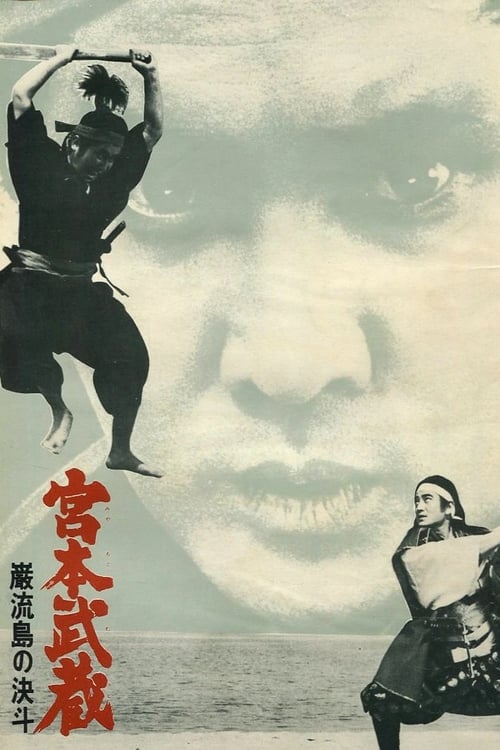
Miyamoto Musashi V: Musashi vs Kojiro
1965
No user ratings available yet
Representation score: 3.2 out of 10
Representation Score
Minimal
1971
Not RatedDirector
Tomu Uchida
Runtime
75 minutes
Average Rating
No ratings yetNew Showbiz Analysis
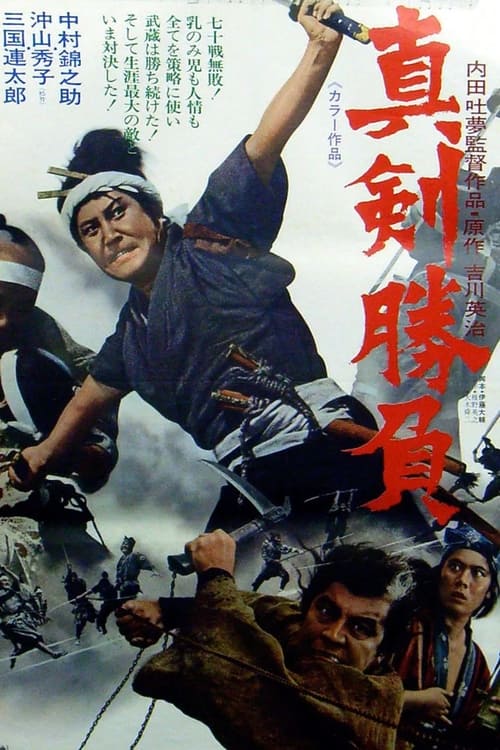
Miyamoto Musashi VI: Swords of Death is a traditional historical drama that prioritizes classical themes of honor and individual vengeance. The narrative focuses on the adversarial relationship between Musashi and Baiken Shishido, driven by personal grief rather than simple malice. The film reinforces conventional social hierarchies by centering the antagonist's humanity through his role as a stable provider and family man. This emphasis on patriarchal stability and familial duty maintains a traditional moral framework. While the film achieves cultural authenticity within its Japanese historical context, it lacks diversity in terms of gender expression, LGBTQ+ representation, and multi-layered identities.
Category Breakdown
The film focuses on historical martial rivalry and traditional familial structures. There are no depictions of non-straight relationships or narratives challenging the assumption that everyone is straight.
The story centers on masculine archetypes like vengeance and martial skill. The antagonist is framed through patriarchal roles as a devoted husband and father.
The cast is culturally homogeneous, reflecting the Edo period setting. It prioritizes historical authenticity over modern diversity.
The plot is driven by classical themes of familial honor and duty. It reinforces traditional social structures rather than critiquing them.
There is no documented evidence regarding the portrayal of physical or neurodivergent disabilities in this installment.
Present on Screen
Limited or Absent
Official Synopsis
In the sixth and final episode Rentaro Mikuni steals the show as Baiken Shishido, Musashi's nemesis. Mikuni is the nominal villain of the film, but he is a devoted husband and father as well. He tries to kill Musashi only to avenge the death of his brother-in-law. While Baiken (who wields a chain and sickle against Musashi's sword) is a very human character and the emotions that Mikuni displays in his performance are quite believable and engaging
1965
2003
1963
1974
1964
1962
1969
1964
No reviews yet. Be the first to share your thoughts on this movie!
Use the rating form above to leave a star rating and optional review.