Secret of The Golden Spell
1958
No user ratings available yet
Representation score: 4.4 out of 10
Representation Score
Minimal
1961
Director
Kazuo Mori
Runtime
98 minutes
Average Rating
No ratings yetNew Showbiz Analysis
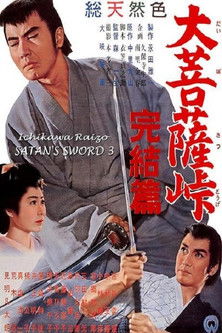
Satan's Sword III: The Final Chapter is a traditional Japanese period drama that prioritizes genre-standard martial prowess and social posturing. The plot follows Ryunosuke through a series of masculine-coded conflicts, adhering strictly to the storytelling norms of early 1960s Japanese cinema. The film functions as a period action piece rather than a vehicle for social critique. It lacks the complexity or subversion necessary to move beyond its conventional framework.
Category Breakdown
The film does not include any characters with LGBTQ identities. The storyline focuses on traditional conflicts without exploring queer perspectives.
The story centers on male-driven action clichés and conflict between men. There is no indication of women taking a leading role or challenging gendered roles.
As a 1961 Japanese production, the cast is ethnically uniform. It represents Japanese culture but lacks diverse racial blending.
The film adheres to standard period drama conventions. It focuses on individual struggles rather than critiques of institutions or secular themes.
There is no mention of characters navigating physical or neurodivergent disabilities within the narrative.
Present on Screen
Limited or Absent
Official Synopsis
Disguised as a beggar monk, Ryunosuke is harassed along the road by the rowdy members of a country dojo or fencing school malingering outside their fencing hall. The third film in the Satan's Sword trilogy.
1958

1972
1960
1962
1959
1963
1963
1960
No reviews yet. Be the first to share your thoughts on this movie!
Use the rating form above to leave a star rating and optional review.