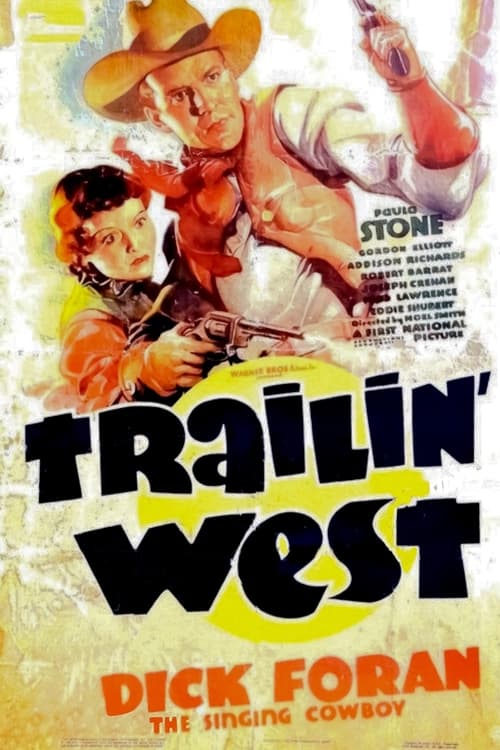
Trailin' West
1936
No user ratings available yet
Diversity score: 1.9 out of 10
1936
PassedDirector
Noel M. Smith
Runtime
56 minutes
Average Rating
No ratings yetSynopsis
A singing cowboy (Dick Foran) thwarts a thieving judge and courts a woman (Anne Nagel) in Texas.
Overall Score
Limited
Category Breakdown
LGBTQ+ Representation
The film follows a strictly heteronormative path. The plot focuses entirely on the protagonist's romantic pursuit of a female lead, offering no presence of non-cisnormative identities.
Gender Representation
Gender roles remain traditional and hierarchical. While a female lead exists, agency is concentrated in the male protagonist, who drives the justice and resolution of the story.
Racial & Ethnic Diversity
Casting is homogeneous, reflecting the standard studio Westerns of the 1930s. The narrative focuses on a white protagonist without including diverse ethnic perspectives or intersectional casting.
Religious & Cultural Diversity
The story upholds classic frontier tropes and traditional Western values. It emphasizes clear-cut morality and individualistic justice rather than offering any systemic or secularist critiques.
Disability Representation
There is no discernible representation of physical or neurodivergent disabilities. Characters operate within the standard physical capabilities expected of the Western genre.
Strengths
Areas for Improvement
AI Analysis
Guns of the Pecos is a quintessential 1930s B-Western that prioritizes genre conventions over demographic complexity. It functions as a standard piece of frontier mythology, reinforcing the social and cultural norms of its era through a rigid moral dichotomy. The film relies on traditional archetypes, such as the singing cowboy hero and the corrupt judge, to drive a simple narrative of justice. This structure leaves little room for diverse perspectives or the deconstruction of social hierarchies. Ultimately, the work serves to uphold established social orders rather than challenge them, making it a predictable but era-accurate example of mid-30s filmmaking.
1936
1931
1934
1940
1928
1934
1938
1936
1934
1922
1953
1950
No reviews yet. Be the first to share your thoughts on this movie!
Use the rating form above to leave a star rating and optional review.