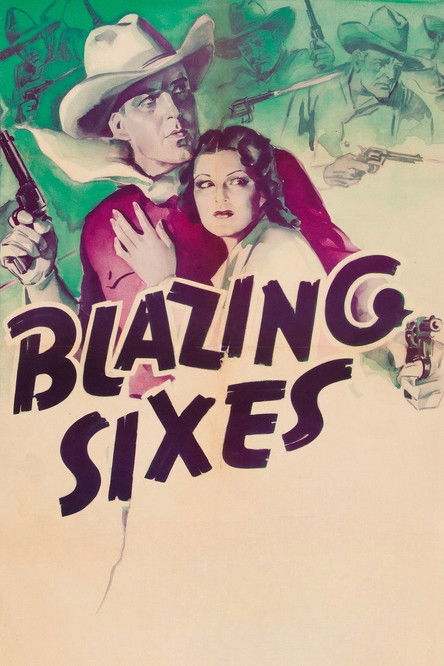
Blazing Sixes
1937
No user ratings available yet
Diversity score: 2.3 out of 10

1936
ApprovedDirector
Noel M. Smith
Runtime
56 minutes
Average Rating
No ratings yetSynopsis
A singing secret agent tracks down renegades at President Lincoln's request.
Overall Score
Minimal
Category Breakdown
LGBTQ+ Representation
The film adheres to the heteronormative standards of 1936. It focuses on a singular male agent performing patriotic duties, offering no non-cisnormative identities.
Gender Representation
The narrative is driven by a male protagonist acting for a male political figure. Female characters appear relegated to passive roles without significant agency.
Racial & Ethnic Diversity
The film likely follows the era's tendency toward homogeneous white protagonist groups. It lacks evidence of non-Anglo-Saxon casting or diverse ethnic representation.
Religious & Cultural Diversity
The story reinforces traditional Western institutions and federal authority. It utilizes a binary moral framework of law-abiding agents versus renegades.
Disability Representation
There is no evidence of characters with visible or invisible disabilities being integrated into the narrative with agency.
Strengths
Areas for Improvement
AI Analysis
Trailin' West is a conventional 1930s Western that prioritizes genre stability over social commentary. The narrative follows a standard hero-versus-renegade framework, centered on a singing secret agent performing a task for President Lincoln. The film functions as a traditionalist artifact, reinforcing established social hierarchies and institutional authority. It relies on the rigid genre conventions of the B-movie Western circuit, focusing on formulaic adventure and musical interludes. Ultimately, the work offers minimal disruption to the cultural norms of its era. It maintains a singular morality and traditional masculine archetypes typical of mid-1930s cinema.
1937
1936

1929
1944
1939
1949
1947
1934
1934
1946
1942

1937
No reviews yet. Be the first to share your thoughts on this movie!
Use the rating form above to leave a star rating and optional review.