
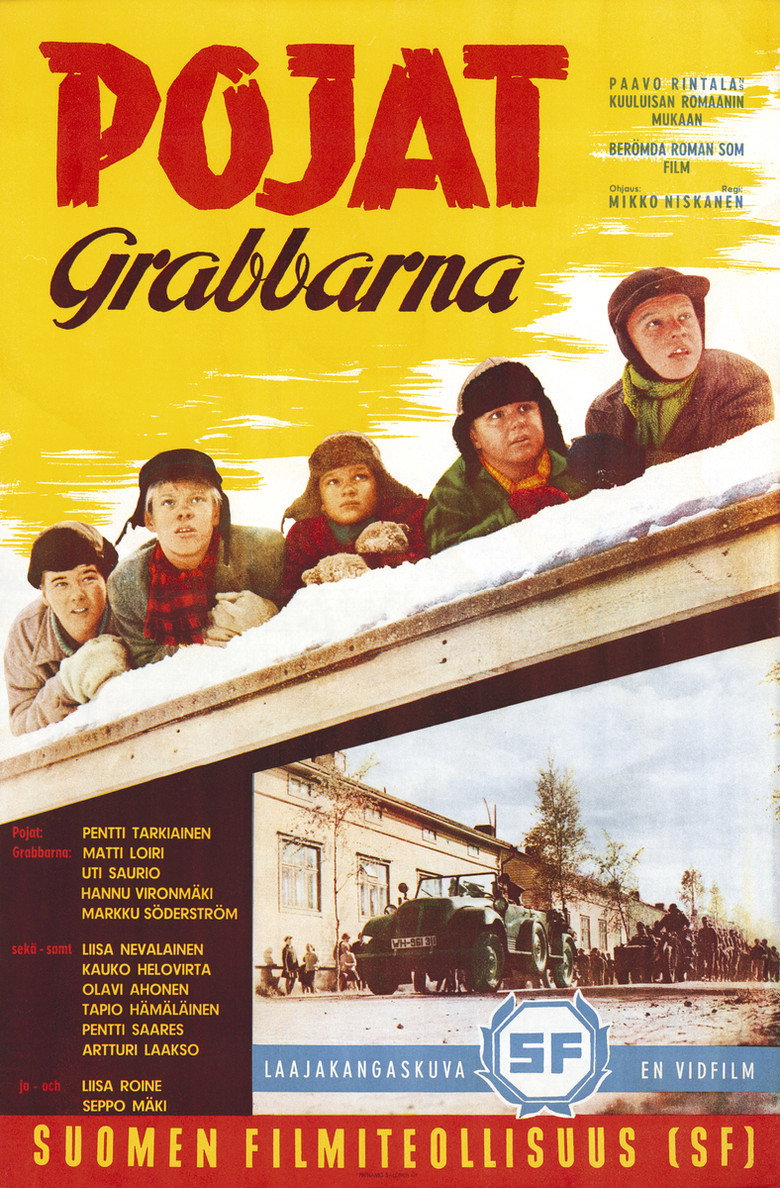
See You in the Next War
1980
No user ratings available yet
Diversity score: 6.4 out of 10
1962
Director
Mikko Niskanen
Runtime
106 minutes
Average Rating
No ratings yetSynopsis
When Continuation War started in Summer 1941, German soldiers arrived to Oulu. With their charm they conquered women and town boys. Finnish boys communicated with them on many levels: had trades, worked as interpreters, rotated business, spied on German love adventures and fought with each other about the favor of soldiers. In autumn 1944, the war was ending. Germans left Oulu by leaving behind fragile relationships, bastard kids and unfinished businesses. The most shocking of all was the faith of young Jake...
Overall Score
Fair
Category Breakdown
LGBTQ+ Representation
The film touches on shifting romantic dynamics and complex interpersonal connections brought by the German occupation. However, it lacks explicit depictions of non-cisnormative identities or same-sex relationships.
Gender Representation
Women exhibit increased agency as they are charmed by foreign soldiers, subverting traditional domestic hierarchies. Despite this, the primary narrative lens remains focused on the male experience.
Racial & Ethnic Diversity
The presence of German soldiers introduces cultural friction and 'otherness' to the Finnish setting. The mention of children born from these unions suggests a focus on ethnic integration.
Religious & Cultural Diversity
The story explores the erosion of traditional social fabrics and institutional stability. Jake's shocking faith highlights a move toward moral relativism amidst the chaos of war.
Disability Representation
There is no discernible evidence regarding the portrayal of physical or neurodivergent disabilities in this work.
Strengths
Areas for Improvement
AI Analysis
Mikko Niskanen’s drama avoids the typical tropes of a patriotic war epic, focusing instead on the sociological disruption caused by the German presence in Oulu. It examines how external geopolitical forces dismantle local social structures and community norms. The film succeeds in portraying the messy, uncomfortable realities of cultural intersection and the biological consequences of occupation. It moves beyond simple combat narratives to explore the domestic fallout of shifting power dynamics. However, the perspective remains largely masculine, and the film lacks specific representation for LGBTQ+ identities or disability. It functions more as a study of social fragmentation than a diverse character ensemble.
1980
1965
1965
1996
1984
2005

1966
1946

1989
1973
1983
2011
No reviews yet. Be the first to share your thoughts on this movie!
Use the rating form above to leave a star rating and optional review.