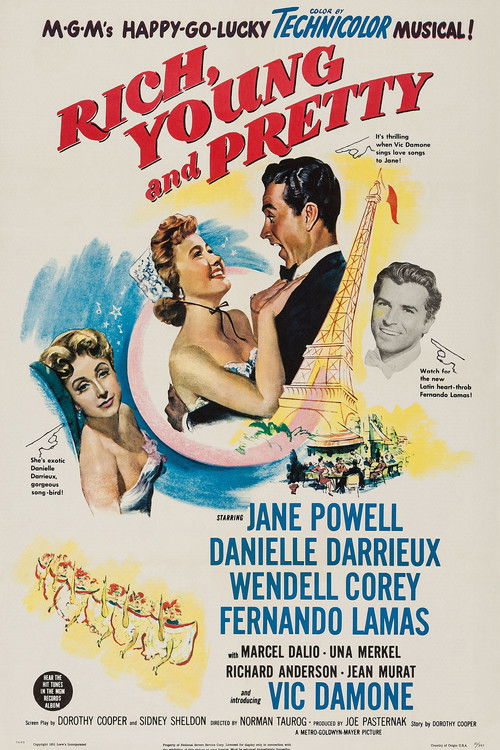
Rich, Young and Pretty
1951
No user ratings available yet
Diversity score: 2.9 out of 10
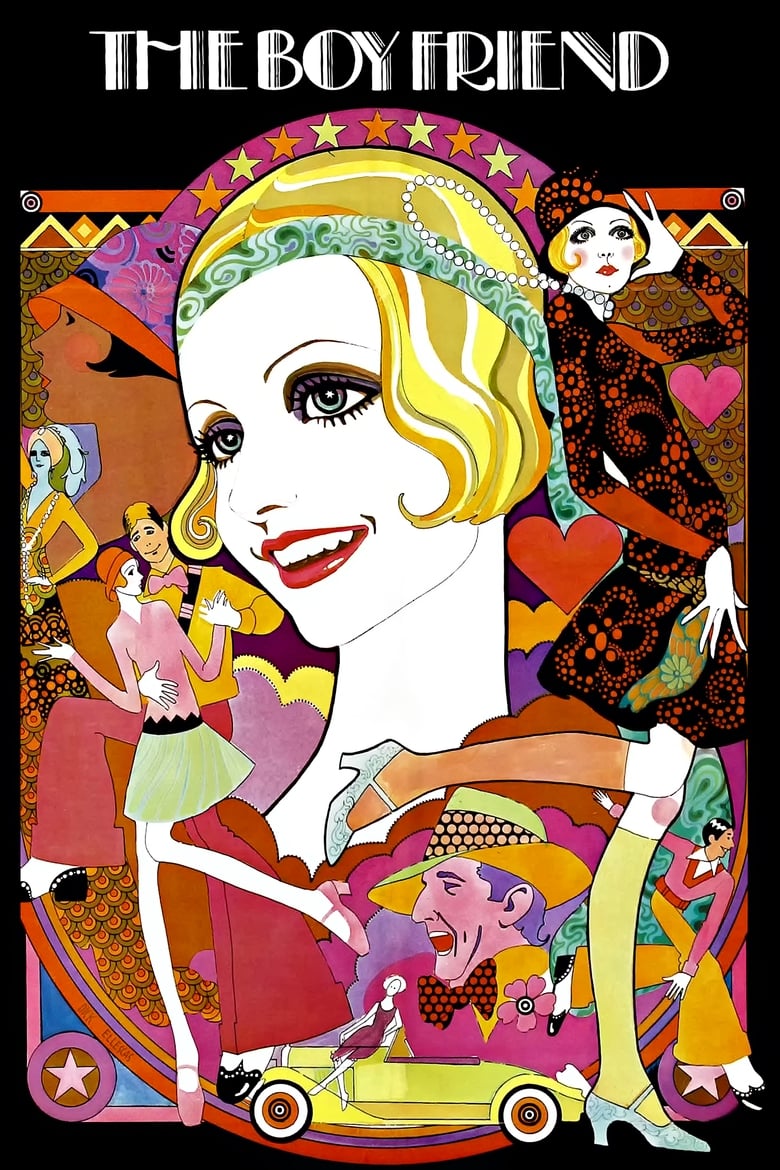
1971
PGDirector
Ken Russell
Runtime
138 minutes
Average Rating
No ratings yetSynopsis
When the leading lady of a low-budget musical revue sprains her ankle, the assistant stage manager is forced to understudy and perform in her place.
Overall Score
Limited
Category Breakdown
LGBTQ+ Representation
The film adheres to heteronormative romantic structures typical of 1920s musicals. While the camp aesthetic invites queer readings, the narrative lacks explicit LGBTQ+ characters or non-cisnormative identities.
Gender Representation
Characters largely reinforce flapper-era archetypes and traditional courtship. While the protagonist shows agency by stepping into a lead role, the film celebrates stylized femininity rather than subverting gender hierarchies.
Racial & Ethnic Diversity
Casting is largely homogeneous, reflecting the specific historical period being emulated. This results in a lack of intersectional or non-Anglo-Saxon representation within the central cast.
Religious & Cultural Diversity
The narrative serves as an aestheticized homage to Western entertainment traditions. It avoids critiques of institutions, opting instead for a celebratory, escapist tone centered on traditional social structures.
Disability Representation
The film does not prominently feature characters with visible or invisible disabilities. Disability is not utilized as a central narrative device.
Strengths
Areas for Improvement
AI Analysis
Ken Russell’s film functions as a postmodern pastiche of 1920s musical comedies, prioritizing genre homage over social disruption. The production uses maximalism to reconstruct a traditional, Westernized musical fantasy rather than challenging the status quo. The narrative architecture is designed for nostalgia and aesthetic pleasure. It relies on established tropes and escapism, which limits the opportunity for meaningful intersectional representation or systemic critique. Ultimately, the film embraces the artifice of its era. It celebrates the stylized tropes of the past without attempting to deconstruct the social hierarchies or power dynamics of the period.
1951
1946
1955
1944
1975

1960
1953
1950
1951
1953

1937
1966
No reviews yet. Be the first to share your thoughts on this movie!
Use the rating form above to leave a star rating and optional review.