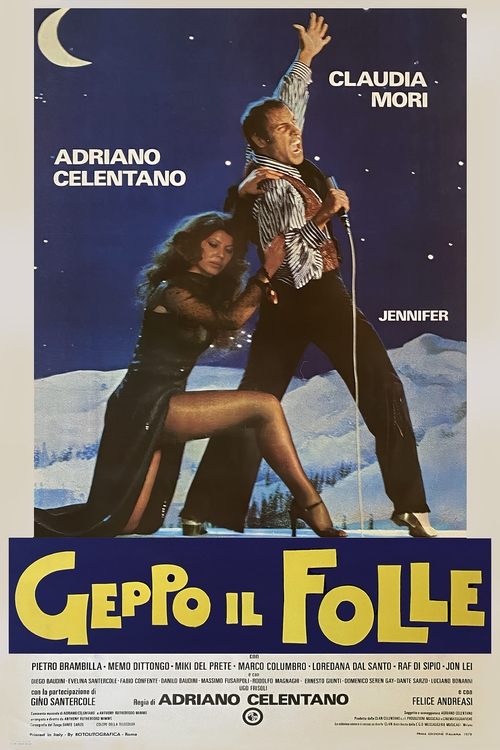
Geppo il folle
1978
No user ratings available yet
Representation score: 2.9 out of 10
Representation Score
Limited
1975
Director
Adriano Celentano
Runtime
116 minutes
Average Rating
No ratings yetNew Showbiz Analysis
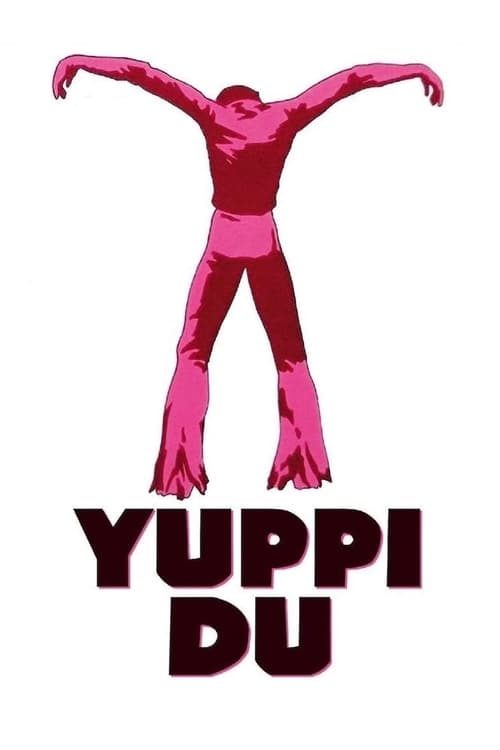
Yuppi Du reflects the social constraints and narrative conventions of 1970s Italian comedy. It slightly subverts traditional roles through its female lead's autonomy but remains rooted in straight-centered and Eurocentric frameworks. The film's strengths lie in its potential for social commentary through its dystopian setting and class-based protagonist. However, it does not engage significantly with racial, ethnic, or LGBTQ+ diversity, focusing instead on a traditional family dynamic. Ultimately, Yuppi Du serves as a character-driven comedy exploring individual desires against societal norms, yet it does not push boundaries regarding broader demographic representation.
Category Breakdown
The film does not include any queer narratives or non-traditional gender identities. The main storyline revolves around a traditional family unit.
The female lead gains autonomy by pretending to die to escape her marriage. However, the conflict centers on domestic issues rather than broader gender critiques.
The cast reflects typical 1970s Italian cinema, focusing on localized social dynamics without addressing multi-ethnic or diverse themes.
Set in a dystopian Venice, the film critiques social orders and class structures. Themes revolve around Western values of family and personal happiness.
There are no visible or invisible disabilities highlighted in the character arcs or plot progression.
Present on Screen
Limited or Absent
Official Synopsis
In a dystopian Venice, humble fisherman Felice finds out his deceased wife isn't actually dead, having faked her suicide to disappear from his life. Only, now she's back, and wants their daughter too!
1978
1966

1983

1976

1983

1960

1964
1978
No reviews yet. Be the first to share your thoughts on this movie!
Use the rating form above to leave a star rating and optional review.