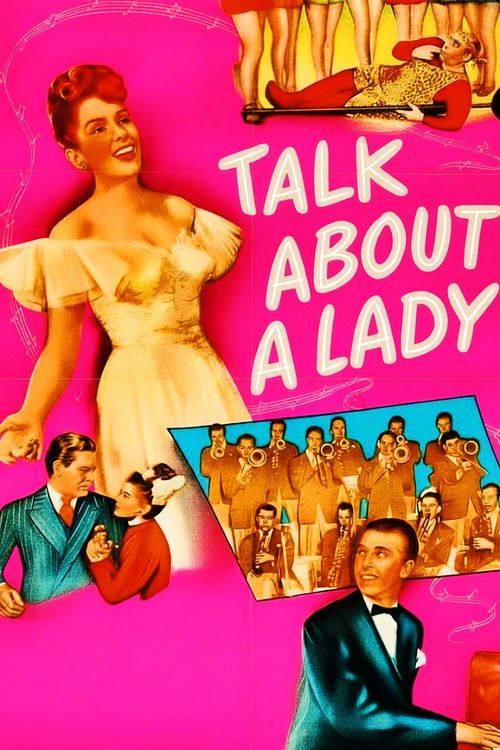
Talk About a Lady
1946
No user ratings available yet
Representation score: 0.8 out of 10
Representation Score
Minimal
1946
ApprovedDirector
David Butler
Runtime
105 minutes
Average Rating
No ratings yetNew Showbiz Analysis
The film adheres to the conventions of the 1940s studio system, emphasizing traditional romantic clichés and established social hierarchies. While the female lead showcases professional talent, the narrative remains confined by the era's restrictive gender norms. Representation is limited across the board. The plot operates within a straight-centered framework and lacks significant racial or cultural diversity, reflecting the homogeneous standards of mid-century Hollywood. The tension between musical genres highlights class distinctions rather than serving as a tool for social critique. Ultimately, the film functions as a typical musical comedy that reinforces, rather than challenges, the status quo of its time.
Category Breakdown
The film follows a traditional romantic comedy structure focused on a male lead pursuing a female lead. There is no indication of queer subtext or non-cisgender identities.
Vicki Cassel shows professional leadership as an opera singer and Broadway lead. However, the plot relies on patriarchal gatekeeping and traditional male roles such as the 'ladies' man.'
The narrative centers on opera and Broadway, settings traditionally favoring homogeneous casting. No diverse racial or ethnic characters are present in the story.
The conflict examines the tension between high and low culture. The resolution upholds traditional capitalist structures and institutional support rather than critiquing social systems.
The story does not mention characters with visible or invisible disabilities. No neurodivergent or physically disabled characters are featured in the narrative.
Present on Screen
Limited or Absent
Official Synopsis
The stuffy manager of lovely opera singer Vicki Cassel and her uncle, a classical conductor, is determined to close down the noisy nightclub next door to the Cassels' home. The club's owners--Steve, a handsome ladies' man, and Jeff, his clownish sidekick--hatch a plan to keep the club open. Steve arranges to meet--and woo--Vicki and then invite her and her uncle to the club. When Vicki's snobbish aunt and the manager discover that Vicki now favors popular music over the classics, they arrange to get the club closed. But that doesn't keep Steve and Jeff down. Instead, they decide to put on a Broadway show if they can get a backer. They find their "angel" in Vicki's uncle who agrees to finance the show only if Vicki is the leading lady. But again, Vicki's aunt and manager may be the spoiler in everyone's plans.
1946
1933
1947

1953

1947
1954
1950
1953
No reviews yet. Be the first to share your thoughts on this movie!
Use the rating form above to leave a star rating and optional review.