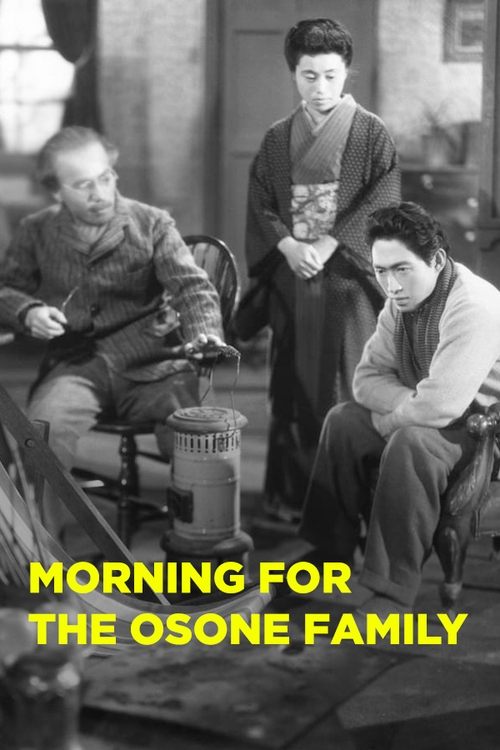
Morning for the Osone Family
1946
No user ratings available yet
Representation score: 4.6 out of 10

Representation Score
Good
1948
Director
Yasujirō Ozu
Runtime
84 minutes
Average Rating
No ratings yetNew Showbiz Analysis
Ozu’s film is a sophisticated study of individual ability to act within a collapsing social framework. It succeeds by challenging the idealized family cliché, offering a realistic look at how women in post-war economies navigate moral ambiguity for survival. The film’s strength lies in its focus on female resilience and its nuanced critique of systemic instability. It avoids simple moralism, instead focusing on the human condition during a period of profound social transition. However, the film lacks contemporary markers of identity politics, such as LGBTQ+ representation or diverse ethnic casting. The use of illness as a narrative driver also limits the depth of its disability representation.
Category Breakdown
The film centers on a traditional marriage and does not include any queer narratives or non-cisgender identities.
Tokiko's actions drive the plot as she deals with extreme economic hardship. Her choice to become a sex worker to save her child shows her active role rather than passivity.
The cast is uniform, reflecting the historical context of post-war Japan. It provides an authentic and culturally specific portrayal of a non-Western society undergoing change.
The story critiques systemic failures and the fragility of social institutions. It explores the struggles of a family navigating a broken social contract through situational ethics.
A child's illness serves as the main catalyst for the plot. However, the illness functions primarily as a plot device rather than a deep exploration of disability.
Present on Screen
Limited or Absent
Official Synopsis
Tokiko patiently awaits her husband's return from WWII when her four-year old son falls ill. She takes him to the doctor but has no means of paying, so she resorts to prostitution. A month later, her husband returns to find his desperate wife, who tells him the truth. Together, they must deal with the consequences.
1946
1936
1953
1955
1942
1963

1958
2013
No reviews yet. Be the first to share your thoughts on this movie!
Use the rating form above to leave a star rating and optional review.