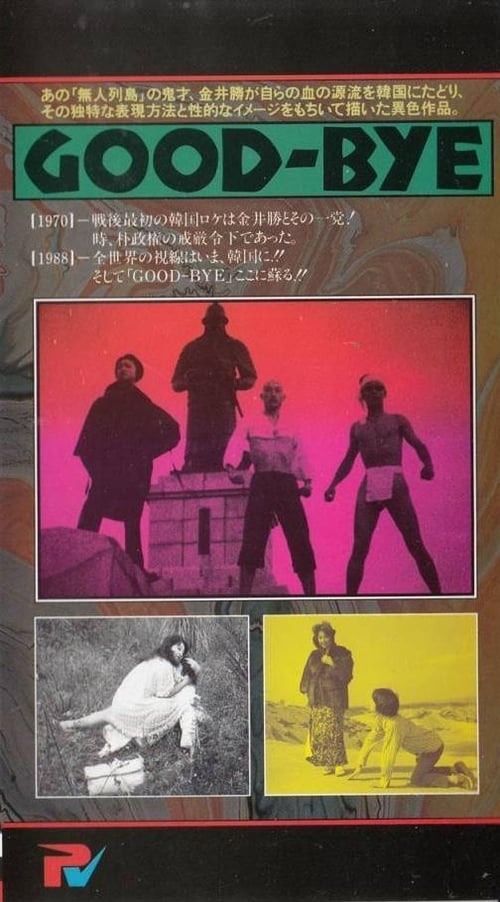
Good-Bye
1971
No user ratings available yet
Diversity score: 6.6 out of 10

1969
Director
Katsu Kanai
Runtime
56 minutes
Average Rating
No ratings yetSynopsis
A young man reaches adolescence and escapes the nunnery where he survived a tortured upbringing; the world outside suddenly seems even more frightening than before.
Overall Score
Fair
Category Breakdown
LGBTQ+ Representation
The film contains no evidence of queer narratives or non-heteronormative identities. The story focuses on a singular protagonist's transition into adolescence.
Gender Representation
The narrative centers on a male protagonist's struggle for agency. While the nunnery setting implies a female-dominated environment, the film's stance on gender hierarchies remains unclear.
Racial & Ethnic Diversity
As a 1969 Japanese production, the cast likely reflects the ethnic homogeneity of its era. There is no specific information regarding diverse casting.
Religious & Cultural Diversity
The film offers a skeptical view of organized faith by framing a nunnery as a site of systemic trauma. This disrupts traditional, positive portrayals of religious devotion.
Disability Representation
Despite the protagonist's history of a tortured upbringing, there is no verified depiction of physical disability or neurodivergence as central character traits.
Strengths
Areas for Improvement
AI Analysis
The Deserted Archipelago is a character-driven drama exploring the tension between institutional dogma and individual autonomy. It uses a coming-of-age framework to critique the psychological impact of restrictive religious structures. While the film shows potential for cultural subversion by portraying a nunnery as a source of trauma, it lacks representation of intersectional identities. The narrative remains focused on a singular, traditional coming-of-age arc. Ultimately, the film's diversity is limited by its focus on a specific male protagonist and its likely adherence to the demographic norms of 1969 Japanese cinema.
1971

1984

1968

1972

2003

1960

1962

2016

1966
1959

1964
1969
No reviews yet. Be the first to share your thoughts on this movie!
Use the rating form above to leave a star rating and optional review.