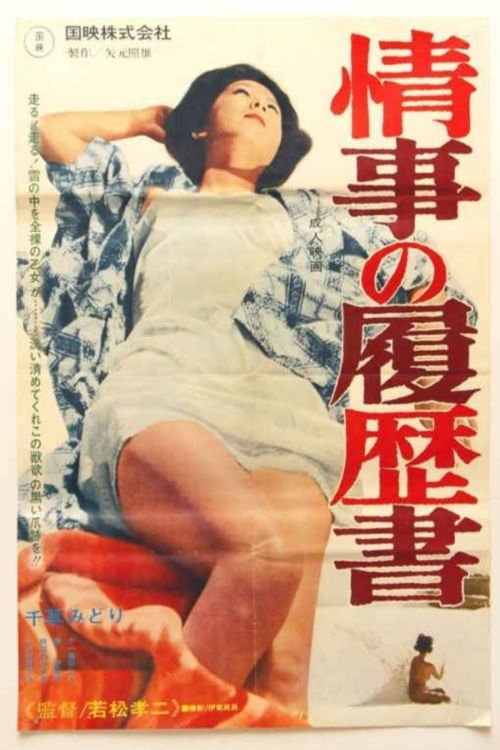
Resume of Love Affairs
1965
No user ratings available yet
Representation score: 5.2 out of 10

Representation Score
Limited
1966
Director
Nagisa Ōshima
Runtime
99 minutes
Average Rating
No ratings yetNew Showbiz Analysis
Nagisa Ōshima’s film is a sophisticated exploration of systemic failure rather than a broad representation of diverse demographics. It prioritizes the deconstruction of institutional morality and the breakdown of legal authority. The film uses moral relativism to challenge traditional notions of justice and social stability. While it lacks LGBTQ+ and disability representation, it achieves progressive value through its narrative structure. It presents the community’s righteous anger as a tool for scapegoating rather than seeking truth.
Category Breakdown
The film does not include any LGBTQ+ characters or explore non-straight relationships. It focuses on the interpersonal dynamics of the main characters and how the community reacts to a crime.
Women play key roles in the story, navigating a male-dominated society in post-war rural Japan. However, their actions are constrained by the rigid, patriarchal order of the time.
The cast is predominantly Japanese, maintaining cultural authenticity and a localized, ethnically homogeneous setting. The film chooses to stay true to its historical context rather than blending in modern diversity.
The film effectively critiques traditional institutions and communal hypocrisy. It portrays the village's collective anger as a source of systemic dysfunction, challenging the status quo.
The narrative does not feature any characters with visible or invisible disabilities.
Present on Screen
Limited or Absent
Official Synopsis
Two young women must come to terms with the fact that a man they're deeply linked to is a murdering rapist.
1965

1978

1972

1969

1972
1977

1985

1976
No reviews yet. Be the first to share your thoughts on this movie!
Use the rating form above to leave a star rating and optional review.