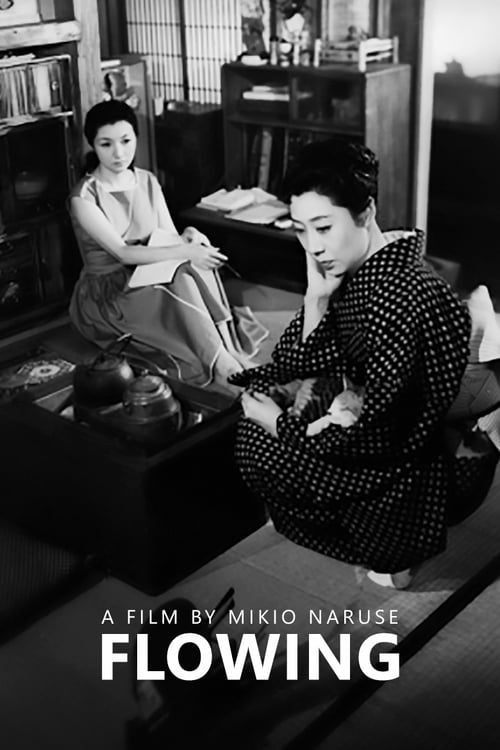
Flowing
1956
No user ratings available yet
Representation score: 3.3 out of 10

Representation Score
Fair
1964
Director
Keisuke Kinoshita
Runtime
203 minutes
Average Rating
No ratings yetNew Showbiz Analysis
Keisuke Kinoshita’s drama is a thoughtful examination of identity caught between tradition and modernity. While it does not feature the diverse demographic variety seen today, it excels in its intellectual engagement with cultural shifts and gendered expectations. The film’s strength lies in its challenge to traditional hierarchies by focusing on a woman navigating the geisha tradition and post-war autonomy. However, it remains limited by the social constraints of its era, particularly in terms of LGBTQ+ representation and ethnic homogeneity.
Category Breakdown
The film does not include explicit LGBTQ+ characters or relationships that go beyond the assumption that everyone is straight. Instead, it focuses on family and interpersonal tensions typical of its time.
The story centers on the experiences of women, showing them as active participants rather than passive figures. It critiques the restrictive roles imposed by both patriarchy and the societal changes after World War II.
The cast is made up of actors who share similar ethnic backgrounds, reflecting the local historical context of the film. The movie serves as an exploration of Japanese cultural identity rather than a mix of different races.
The film offers a sophisticated look at the impact of Western dominance by comparing Buddhist traditions with the rise of secular society. It examines how modern progress erodes traditional cultural identities.
There is no significant depiction of physical or cognitive disabilities in the film.
Present on Screen
Limited or Absent
Official Synopsis
After her mother runs away from home, Tomoko is raised to be a geisha. One day Tomoko meets her mother in a red-light district in Tokyo and her life deeply gets in trouble.
1956

1956

1951

1952

1987
1968
1965

1954
No reviews yet. Be the first to share your thoughts on this movie!
Use the rating form above to leave a star rating and optional review.