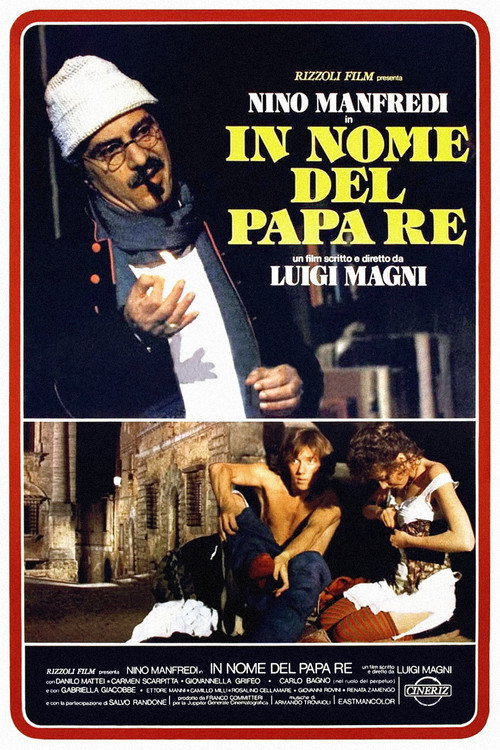
In the Name of the Pope King
1977
No user ratings available yet
Diversity score: 4.9 out of 10
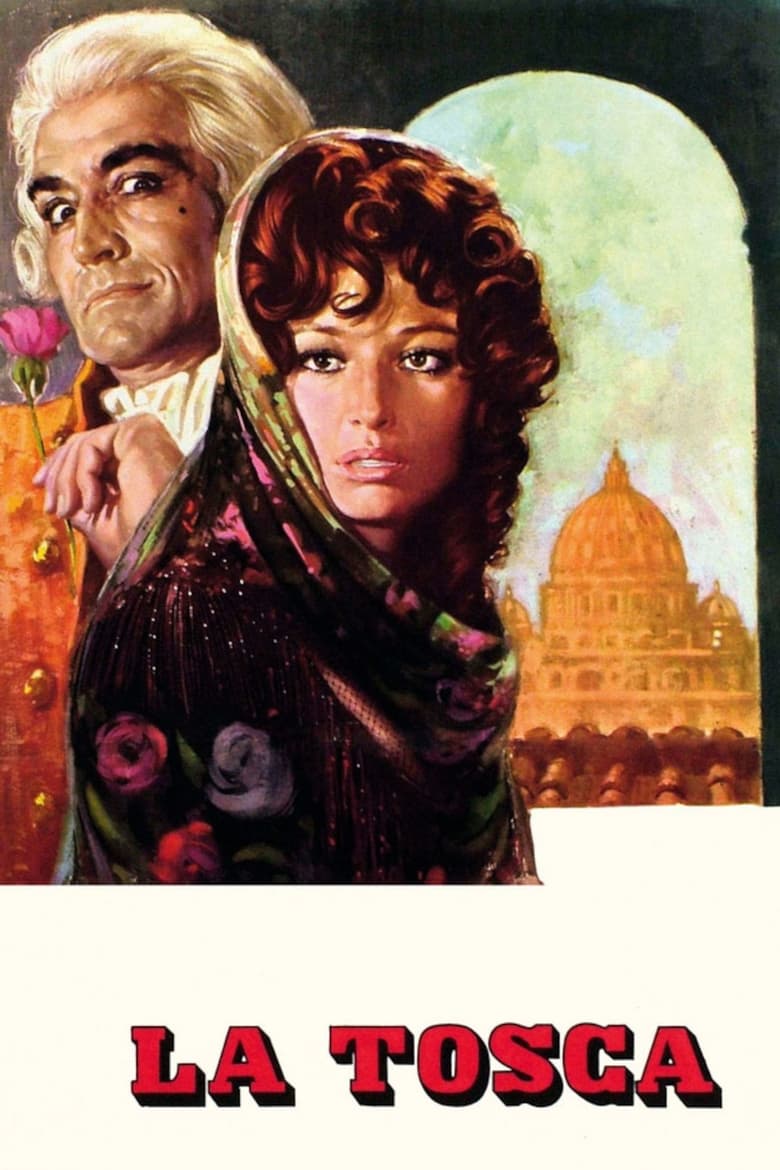
1973
Director
Luigi Magni
Runtime
99 minutes
Average Rating
No ratings yetSynopsis
Rome, 1800. Napoleon threatens the power of the Church and executions of Jacobins are constant. Angelotti, the most famous of them all has escaped from prison and the chief of police is on his tail. Angelotti is being helped by a painter, lover of "La Tosca", a famous singer. The police chief suspects the truth and tries to arouse the jealousy of "La Tosca" to catch the escapee.
Overall Score
Fair
Category Breakdown
LGBTQ+ Representation
The film operates within traditional romantic frameworks. There is no evidence of queer-coded subtext or non-cisnormative identities present in the narrative.
Gender Representation
La Tosca serves as the emotional center of the story, possessing public influence as a famous singer. However, her agency is often undermined by male characters who exploit her jealousy.
Racial & Ethnic Diversity
The cast reflects the homogeneous demographic of 1800s Rome. The film adheres to historical realism without evidence of intentional ethnic blending or race-bent casting.
Religious & Cultural Diversity
The narrative critiques established religious and state hierarchies by focusing on the friction between the Church and Jacobin revolutionaries. It explores themes of systemic upheaval and political skepticism.
Disability Representation
The provided context contains no information regarding characters with physical or neurodivergent disabilities.
Strengths
Areas for Improvement
AI Analysis
La Tosca is a period drama that finds its strength in political subversion rather than modern social intersectionality. It excels at deconstructing institutional hegemony by pitting revolutionary ideals against the power of the Church. While the film provides a strong central female figure, it remains tethered to period-typical gender tropes. The protagonist's emotional volatility is frequently used as a tactical tool by male authority figures. Ultimately, the film is a study of historical power dynamics. It lacks representation for LGBTQ+ identities and disabilities, focusing instead on the socio-political tensions of the Napoleonic era.
1977
1990

1977
1995
1970

1978
1969

1956
1969
1946

1983

2016
No reviews yet. Be the first to share your thoughts on this movie!
Use the rating form above to leave a star rating and optional review.