
That Night of Varennes
1982
No user ratings available yet
Representation score: 2.5 out of 10
Representation Score
Limited
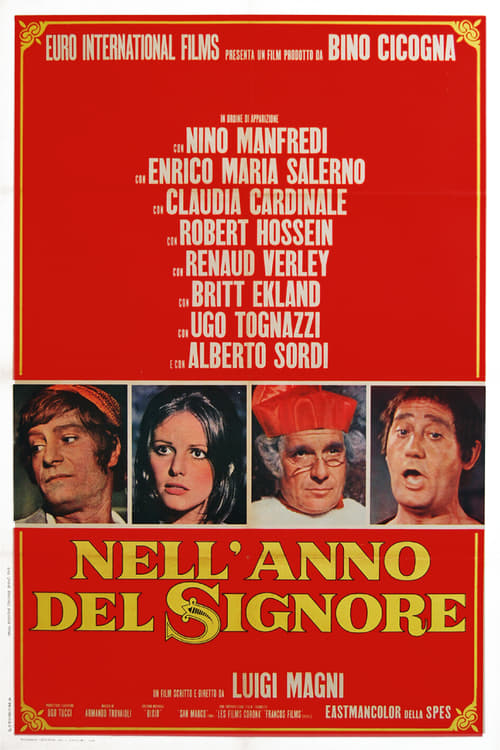
1969
Director
Luigi Magni
Runtime
124 minutes
Average Rating
No ratings yetNew Showbiz Analysis
This period piece prioritizes historical accuracy and political critique over demographic variety. Its low scores in gender, race, and LGBTQ+ representation stem from its focus on the male-dominated revolutionary movements of 19th-century Italy. However, the film excels in cultural subversion, offering a sharp critique of institutional religious power and systemic authority. Ultimately, it is a specialized historical drama that trades broad social representation for a deep, focused examination of the conflict between established dogma and individual conscience.
Category Breakdown
The film does not include any LGBTQ+ identities. It focuses on the political and revolutionary movements of 19th-century Italy, where such identities are not represented.
Women in the film are shown in secondary or domestic roles, reflecting the traditional gender hierarchy of the time. The story centers on male political actors and clerical officials.
The film depicts a relatively homogeneous Italian population during the Risorgimento. There is no evidence of diverse ethnicities representing broader social groups.
The film effectively critiques the temporal power of the Catholic Church, portraying the Papacy as a corrupt force and challenging traditional reverence for religious authority.
There are no prominent characters with physical or neurodivergent disabilities. These elements are not used as plot devices in the film.
Present on Screen
Limited or Absent
Official Synopsis
Rome, 1825. Bishop Rivarola and Colonel Nardoni are in charge of suppressing the liberal revolution. Shoemaker Cornacchia got the information that the liberal Filippo Spada is a spy and is going to denounce his revolutionary companions.
1982

1971

1990

1973
1973

2000
1977

1980
No reviews yet. Be the first to share your thoughts on this movie!
Use the rating form above to leave a star rating and optional review.