
Allonsanfan
1974
No user ratings available yet
Representation score: 5.4 out of 10
Representation Score
Fair
1977
Director
Luigi Magni
Runtime
105 minutes
Average Rating
No ratings yetNew Showbiz Analysis
Luigi Magni’s historical drama stands out through its intellectual subversion rather than broad demographic representation. By focusing on Monsignor Colombo’s refusal to participate in institutional violence, the film challenges the stability of religious authority. The work shines in dismantling systemic power structures and religious dominance. It replaces the traditional 'divine right' narrative with a study of moral relativism and the tension between personal conscience and state. However, the film remains confined by its historical context, which limits racial and gender diversity. The emphasis on a male-dominated ecclesiastical hierarchy restricts the range of social representation.
Category Breakdown
The film adheres closely to a traditional 1867 perspective that assumes everyone is straight or cisgender. Although the protagonist's inner conflict may hint at hidden desires, there is no clear indication of non-straight or non-cisgender identities.
The story centers around a male-dominated religious and judicial system. However, it challenges traditional stereotypes by showing a high-ranking official who is tired and disgusted by his own institution.
The setting mirrors the demographic uniformity of the mid-19th-century Italian peninsula. There is no evidence of significant non-Anglo-Saxon or diverse racial representation within the Roman court.
The film provides a nuanced critique of the Papacy as a political entity. It portrays the Church as a corrupt organization that uses violence to maintain secular power rather than serving as a moral guide.
The narrative does not provide any clear evidence of the portrayal of physical or neurodivergent disabilities.
Present on Screen
Limited or Absent
Official Synopsis
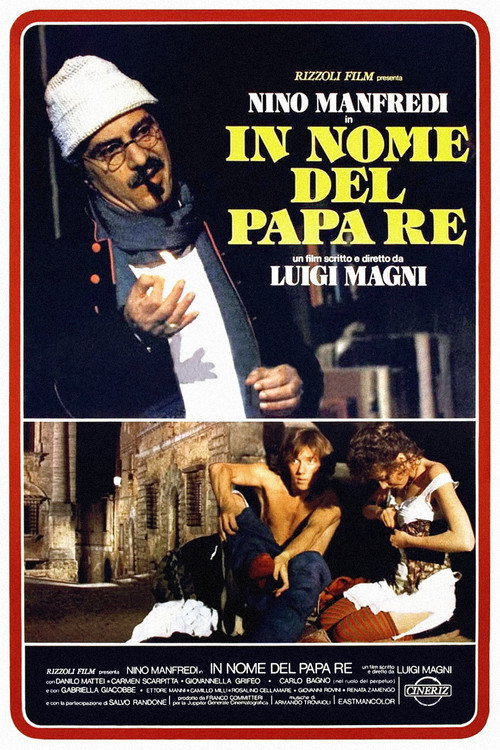
In 1867, with Garibaldi's forces close to bringing Rome into the Italian kingdom, Monsignor Colombo da Priverno, a world-weary judge on the papal court, wants to resign, disgusted by the violence to which the papacy resorts to hold secular power.
1974
2009
1972

2021
1997
1990

1989
2022
No reviews yet. Be the first to share your thoughts on this movie!
Use the rating form above to leave a star rating and optional review.