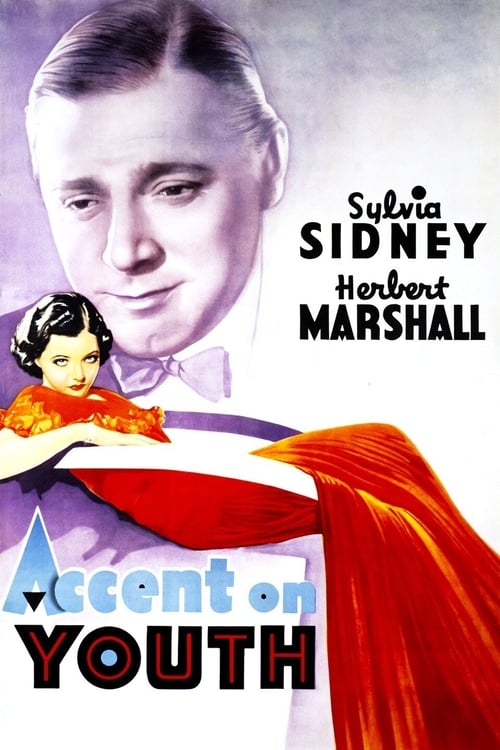
Accent on Youth
1935
No user ratings available yet
Diversity score: 2.8 out of 10

1934
PassedDirector
Edward Ludwig
Runtime
68 minutes
Average Rating
No ratings yetSynopsis
Complications ensue when a young married couple pretend to be something they're not.
Overall Score
Limited
Category Breakdown
LGBTQ+ Representation
The film adheres to the strict social and regulatory norms of 1934. There is no evidence of same-sex intimacy or non-cisnormative gender identities.
Gender Representation
The story centers on a young married couple, likely emphasizing traditional domesticity. While female characters may show wit, they largely occupy standard mid-century romantic roles.
Racial & Ethnic Diversity
The production reflects the homogeneous casting practices of 1930s Hollywood. The narrative centers on a conventional Western social framework without non-white representation.
Religious & Cultural Diversity
The plot focuses on preserving traditional social standing and the sanctity of marriage. It promotes conventional social cohesion rather than critiquing Western institutions.
Disability Representation
There is no discernible mention or depiction of physical, sensory, or neurodivergent characters in the narrative.
Strengths
Areas for Improvement
AI Analysis
Let’s Be Ritzy is a product of the 1930s studio system, operating strictly within the era's established social and regulatory boundaries. The film functions as a conventional romantic comedy that reinforces rather than challenges the period's traditional hierarchies. The narrative architecture lacks the depth required to disrupt expectations regarding identity or social structure. Instead, it relies on standard archetypes of courtship and domestic stability common to mid-century cinema. Ultimately, the film serves as a period piece that mirrors the homogeneous and heteronormative landscape of its time, offering little in the way of intersectional or diverse perspectives.
1935
1948
1930
1930
1934
1937
1941
1941

1942

1937
1938
1938
No reviews yet. Be the first to share your thoughts on this movie!
Use the rating form above to leave a star rating and optional review.