
Si te hubieses casado conmigo
1948
No user ratings available yet
Representation score: 2.5 out of 10
Representation Score
Minimal
1941
Director
Paul Martin
Runtime
89 minutes
Average Rating
No ratings yetNew Showbiz Analysis
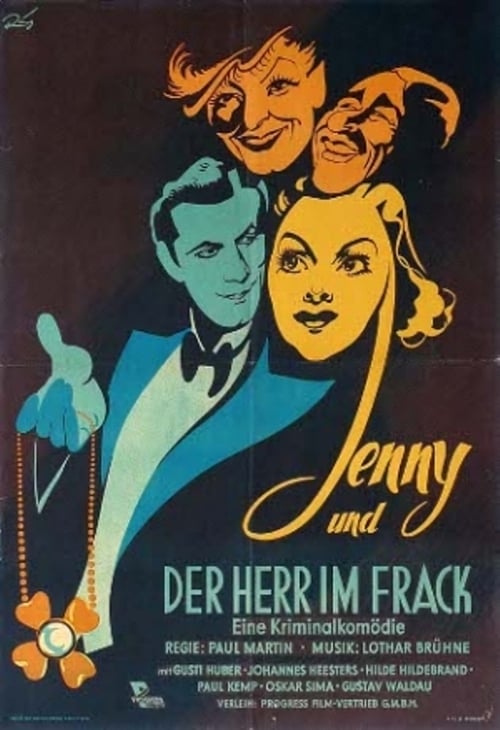
Jenny und der Herr im Frack functions as an escapist musical comedy that prioritizes social decorum over disrupting the status quo. The narrative relies on conventional romantic clichés to maintain established socioeconomic distinctions. The film lacks complexity in reflecting multiple aspects of identity, focusing instead on a streamlined romantic arc. It upholds the traditional social and gender hierarchies prevalent in early 1940s German cinema. Ultimately, the production emphasizes social cohesion and romanticized ideals of high society rather than challenging the status quo.
Category Breakdown
The film follows the heterosexual norms of its time. There are no same-sex romantic relationships or characters with non-binary gender identities.
Jenny is the main character, but her role is defined by her interactions with the male lead. The film upholds traditional romantic structures and gender roles of the mid-century.
The cast and setting appear uniform, reflecting the era's tendency towards a single social norm. There is a lack of visible racial or ethnic diversity.
The story celebrates the established social order and high-society theatrical life. It avoids themes of moral relativism or critiques of Western institutions.
There are no characters with visible or invisible disabilities. Disability is not used as a central theme or character trait.
Present on Screen
Limited or Absent
Official Synopsis
In this intricately plotted crime comedy, Johannes Heesters plays the worldly insurance detective Peter Holm, who is determined to apprehend jewel thief Robert Makaroff. To this end, Holm travels to Copenhagen, where the Hungarian actress Lilly Hegedüsch is staying at a luxury hotel with her rare jewelry. While Holm is searching for Makaroff, Jenny, the sleuthing daughter of Holm's boss, arrives in Copenhagen. Since Jenny doesn't know her secret admirer Holm, numerous mix-ups and suspicions ensue before the rival detectives become lovers.
1948

1946

2009

1943

1941

1942
1942

1935
No reviews yet. Be the first to share your thoughts on this movie!
Use the rating form above to leave a star rating and optional review.