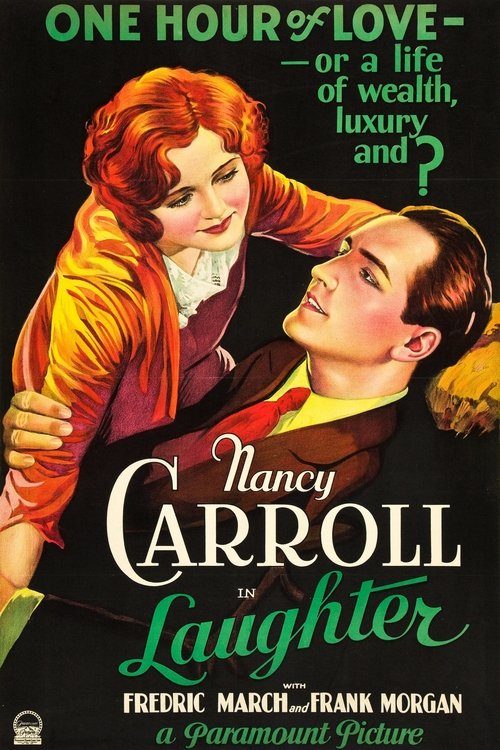
Laughter
1930
No user ratings available yet
Representation score: 0.8 out of 10

Representation Score
Fair
1938
Director
Sacha Guitry
Runtime
95 minutes
Average Rating
No ratings yetNew Showbiz Analysis
Sacha Guitry's comedy dismantles romantic formalities through clever, fast-paced dialogue. The film's strength lies in its challenge to traditional gender hierarchies, giving women professional independence and intellectual equality. However, the social constraints of the 1930s limit the film's scope, lacking racial diversity and explicit LGBTQ+ representation. Ultimately, the work is a sophisticated social satire, trading traditional moral certainty for psychological complexity.
Category Breakdown
The film explores a complex web of romantic relationships but does not explicitly address queer identities.
Female characters play significant roles, including a successful actress and an enterprising reporter, challenging traditional gender roles.
The story focuses on the Parisian elite and a visiting American, reinforcing a homogeneous social setting without much racial diversity.
The film critiques high society through a lens of situational ethics, where characters navigate social norms tactically rather than strictly adhering to moral codes.
There is no mention of characters with visible or invisible disabilities in the narrative.
Present on Screen
Limited or Absent
Official Synopsis
The young American actor Carl Erikson is the darling of the moment. Whilst in Paris on business, he is signing autographs, including one for Paulette Nanteuil, the actress all the rage in France but a complete stranger to Carl. Charmed by the young woman, he hopes to see her again, but she had given him a false name – that of her friend, Claudine André, a journalist. Meanwhile, Carl Erikson has an interview scheduled with Philippe de Morannes, editor-in-chief of ‘Paris-Soir’ and Paulette’s lover. To thank him for granting him the interview, Philippe unwittingly becomes an accomplice of fate by offering him a ticket to Paulette’s show. Carl sneaks into her dressing room, and Paulette, swept away, gives herself to him for a night of passion. Should she leave Philippe or break up with Carl? Will Philippe succumb to Claudine’s charms, even though she herself is not taken with Carl?
1930

1950
1934

1939

1941
1948

1935

1939
No reviews yet. Be the first to share your thoughts on this movie!
Use the rating form above to leave a star rating and optional review.