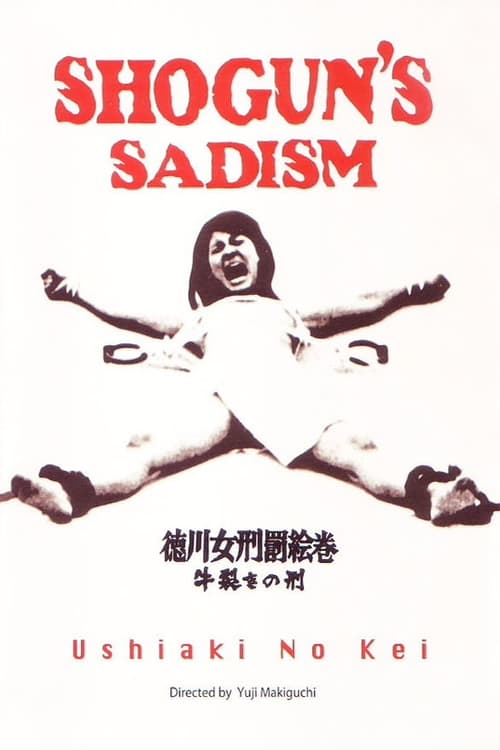
Oxen Split Torturing
1976
No user ratings available yet
Representation score: 5.0 out of 10
Representation Score
Fair
1968
Not RatedDirector
Teruo Ishii
Runtime
96 minutes
Average Rating
No ratings yetNew Showbiz Analysis
Teruo Ishii's work disrupts traditional cinematic conventions through transgressive imagery. By centering women as active, though destructive, agents of the narrative, the film subverts traditional gender hierarchies. This offers a complex alternative to the passive female roles often seen in historical dramas. However, the film's historical setting limits its scope to a homogeneous cast, lacking in racial or ethnic diversity. The focus is strictly on the localized power dynamics of the Shogunate era. Ultimately, the film's strength lies in its cultural critique. It uses grotesque elements to question institutional authority, presenting justice as a source of systemic dysfunction rather than moral righteousness.
Category Breakdown
The film does not explicitly depict non-traditional gender identities or same-sex relationships. Its focus is on the conflict between authority and rebellion, rather than on queer identities.
Women play central roles in driving the plot, challenging the stereotype of submissive females in period dramas.
Given its setting in the Tokugawa era, the film's cast is inherently homogeneous. The story emphasizes internal social hierarchies rather than showcasing diverse ethnic backgrounds.
The film criticizes traditional societal norms by highlighting the brutality of institutional punishment. It portrays Shogunate legal systems as sources of systemic dysfunction.
The film includes scenes of harsh punishments and physical injuries, but it is unclear whether these represent character-driven disabilities or are simply part of the horror plot.
Present on Screen
Limited or Absent
Official Synopsis
A young magistrate recalls three tales of heinous crimes committed by women, and the brutal punishments that ensued.
1976

1960

1967

1976

1969

1970
1994

1980
No reviews yet. Be the first to share your thoughts on this movie!
Use the rating form above to leave a star rating and optional review.