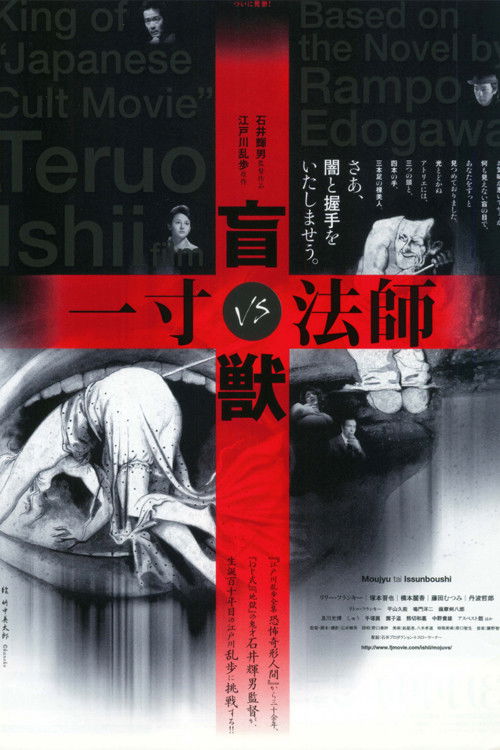
Blind Beast vs Dwarf Killer
2001
No user ratings available yet
Diversity score: 5.3 out of 10

1970
NRDirector
Teruo Ishii
Runtime
85 minutes
Average Rating
No ratings yetSynopsis
Akemi is a dragon tattooed leader of the Tachibana Yakuza clan. In a duel with a rival gang Akemi slashes the eyes of an opponent and a black cat appears, to lap the blood from the gushing wound. The cat along with the eye-victim go on to pursue Akemi’s gang in revenge, leaving a trail of dead Yakuza girls, their dragon tattoos skinned from their bodies.
Overall Score
Fair
Category Breakdown
LGBTQ+ Representation
The film lacks explicit LGBTQ+ characters or narratives. The story focuses on Yakuza violence and supernatural retribution rather than non-heteronormative identities.
Gender Representation
The narrative disrupts hierarchies by centering the consequences of violence on women. The plot focuses on the physical impact on tattooed Yakuza women and their vengeful agency.
Racial & Ethnic Diversity
As a Japanese production, the film operates outside Western storytelling tropes. It provides a culturally specific exploration of organized crime and ritualistic iconography.
Religious & Cultural Diversity
The film engages with themes of subjective morality and deconstructs traditional authority. It utilizes supernatural elements and ritualism that depart from Western secular frameworks.
Disability Representation
Visual impairment and ocular trauma serve as central catalysts for the plot. These physical impairments drive the character's agency and the film's progression.
Strengths
Areas for Improvement
AI Analysis
Teruo Ishii’s work explores the darker fringes of human experience, subverting traditional social orders through transgressive narratives. The film uses the exploitation genre to challenge established power structures. While the film is rooted in violent traditions, it centers vengeance through the lens of the marginalized and the physically altered. This shifts the focus from male-dominated leadership to the agency of victims. The narrative relies on culturally specific spiritualism and ritualistic iconography, moving away from Western moral frameworks to tell a story of supernatural retribution.
No reviews yet. Be the first to share your thoughts on this movie!
Use the rating form above to leave a star rating and optional review.