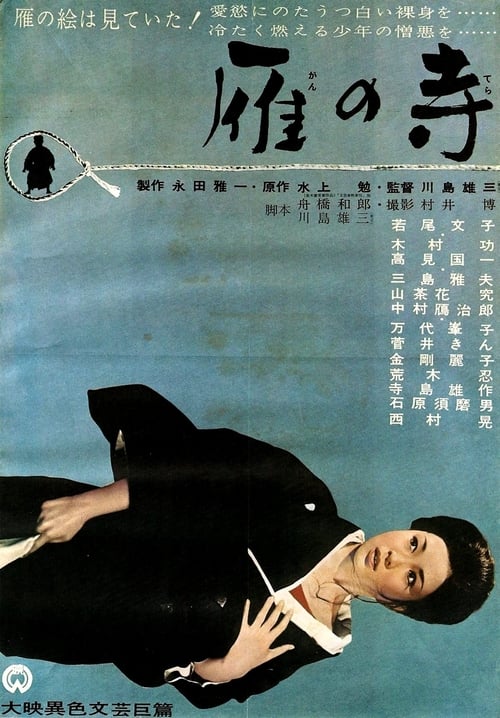
The Temple of Wild Geese
1962
No user ratings available yet
Diversity score: 4.7 out of 10
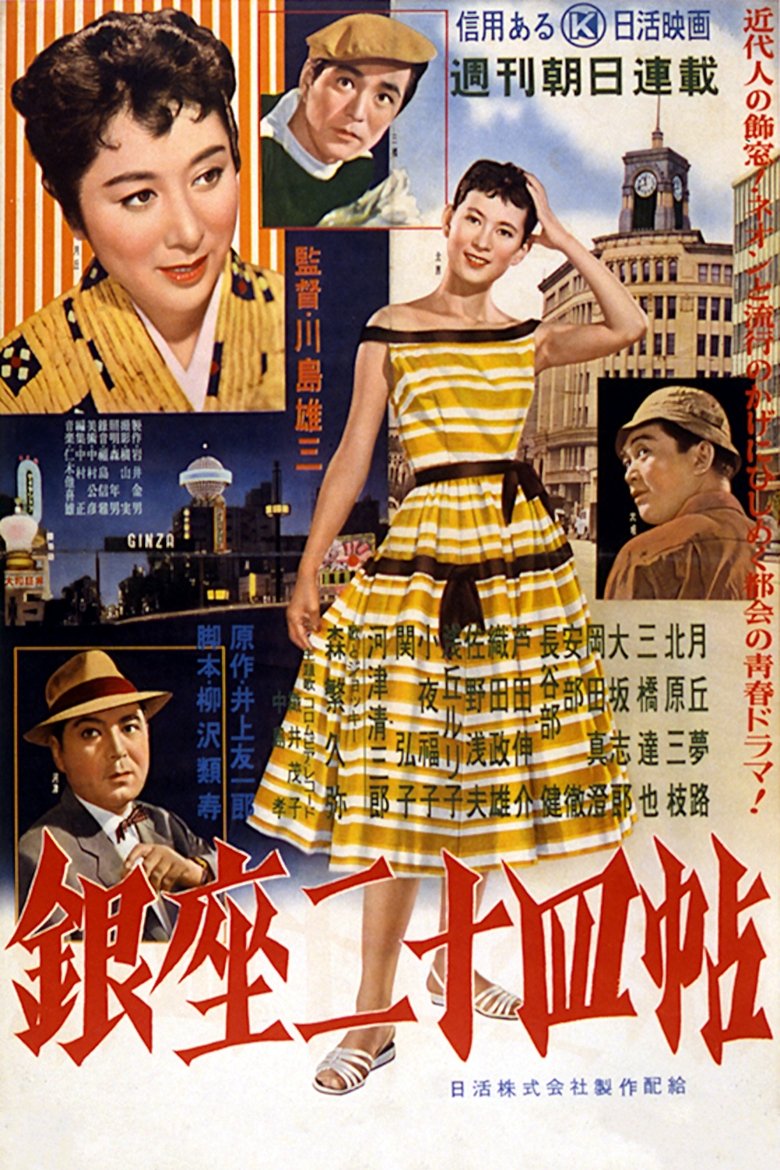
1955
Director
Yūzō Kawashima
Runtime
117 minutes
Average Rating
No ratings yetSynopsis
In the thriving Tokyo neighborhood of Ginza, a woman in the process of selling her estranged husband’s art collection attempts to identify the man who painted her own portrait fifteen years prior.
Overall Score
Fair
Category Breakdown
LGBTQ+ Representation
The film lacks explicit LGBTQ+ characters or non-heteronormative narratives. The plot centers on an estranged marriage and a search for a past connection, suggesting a focus on traditional romantic structures.
Gender Representation
A female protagonist drives the narrative through her management of an art collection and an intellectual mystery. This role provides her with a level of autonomy that challenges submissive mid-century archetypes.
Racial & Ethnic Diversity
Set in Tokyo's Ginza district, the film focuses on a Japanese cast and setting. It represents a culturally specific narrative centered on domestic identity rather than multi-ethnic blending.
Religious & Cultural Diversity
The story explores post-war Japanese social structures through themes of family stability and material legacy. It operates within a standard dramatic framework rather than an overt institutional critique.
Disability Representation
There is no mention of characters navigating physical or neurodivergent disabilities within the narrative.
Strengths
Areas for Improvement
AI Analysis
Tales of Ginza serves as a period-specific character study that finds its strength in gendered agency. By centering a woman's investigative and economic authority, the film disrupts the era's standard domestic tropes. However, the film lacks the intersectional complexity or systemic critiques found in modern progressive media. The narrative remains largely conventional, focusing on traditional familial and romantic structures within a specific Japanese cultural context.
1962
1956
1956
1951

1951
1986
1983
1956
1987
1956

1935
1956
No reviews yet. Be the first to share your thoughts on this movie!
Use the rating form above to leave a star rating and optional review.