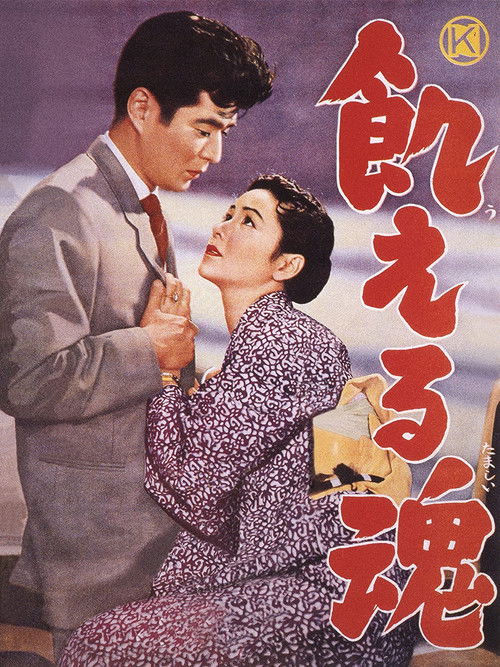
Hungry Soul
1956
No user ratings available yet
Representation score: 5.7 out of 10
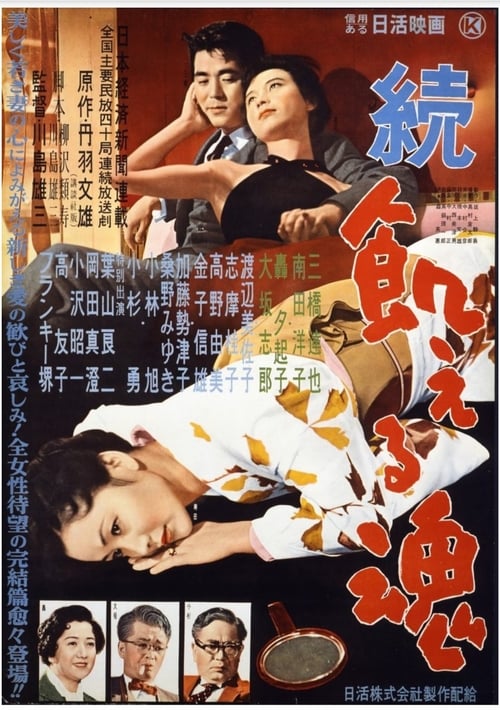
Representation Score
Fair
1956
Director
Yūzō Kawashima
Runtime
97 minutes
Average Rating
No ratings yetNew Showbiz Analysis
Hungry Soul, Part II is a character-driven drama that prioritizes female empowerment over mid-century social norms. By focusing on Reiko's struggle against an abusive, age-gap marriage, the film moves beyond the stereotype of the submissive wife. The narrative is shaped by the emotional journeys of its female protagonists. While the film remains culturally uniform and oriented towards heterosexual relationships, it provides a nuanced critique of traditional family units and patriarchal structures. Ultimately, the film explores the clash between individual desires and societal mandates, offering a platform for women to navigate complex interpersonal power dynamics.
Category Breakdown
The film centers on heterosexual relationships and widowhood. There is no clear depiction of LGBTQ+ romantic relationships or non-cisgender identities.
The story challenges traditional gender roles by focusing on Reiko's emotional growth and her pursuit of independence. The presence of Mayumi, a widow with significant influence, emphasizes a narrative driven by women.
Given its 1956 setting, the film features a culturally uniform cast. It does not blend different racial backgrounds and instead portrays a specific period's domestic life.
The narrative questions the sanctity of traditional domestic institutions by showing an abusive marriage. It highlights individual fulfillment and personal truths over strict patriarchal rules.
There is no mention of characters with visible or invisible disabilities in the provided material.
Present on Screen
Limited or Absent
Official Synopsis
A continuation of Hungry Soul, from the same year. Reiko, who tolerates abuse in her marriage to a man 23 years her senior, is friends with Mayumi, a beautiful widow. Reiko meets her husband’s business rival, a young, capable businessman, and falls for him. Meanwhile, Mayumi enters into a relationship with Shimotsuma, a friend of her late husband.
1956
1955
1955
1951
1955

1952
1967
1957
No reviews yet. Be the first to share your thoughts on this movie!
Use the rating form above to leave a star rating and optional review.