
The Koumiko Mystery
1965
No user ratings available yet
Diversity score: 6.9 out of 10
1977
Director
Chris Marker
Runtime
180 minutes
Average Rating
No ratings yetSynopsis
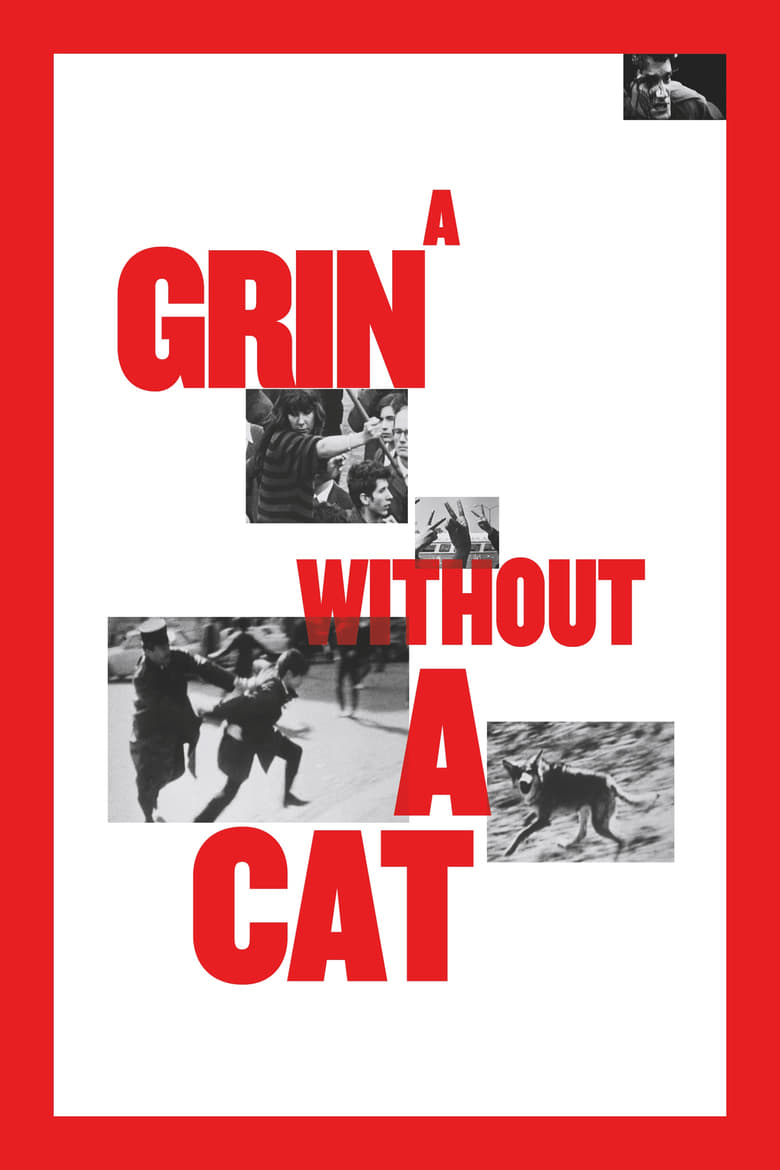
Chris Marker’s A Grin Without a Cat is an epic political essay tracing the rise and decline of the global left from the 1960s to the 1970s. Through archival footage and commentary, the film examines revolutionary movements in France, Latin America, and beyond, reflecting on the ideals, failures, and fading hopes of a generation.
Overall Score
Good
Category Breakdown
LGBTQ+ Representation
The film functions as a political retrospective rather than a character-driven narrative. It lacks intentional centering of LGBTQ+ identities or non-cisnormative expressions, though it avoids derogatory tropes.
Gender Representation
Gender dynamics are observational, capturing women as active participants in global revolutionary and protest movements. The film avoids reinforcing traditional domesticity by showcasing women within the public, political sphere.
Racial & Ethnic Diversity
The work excels by centering the agency of non-Western populations across Latin America, Asia, and Africa. It disrupts Western-centric history by framing the Global South as central to political discourse.
Religious & Cultural Diversity
The film offers a profound critique of capitalism and imperialism. It prioritizes anti-imperialist perspectives, framing Western-aligned structures as entities that necessitate resistance and systemic critique.
Disability Representation
There is no intentional character development regarding disability. While individuals with visible physical differences may appear in archival footage, they are not central thematic focal points.
Strengths
Areas for Improvement
AI Analysis
Chris Marker’s essay film is a masterclass in deconstructing Western-centric hegemony. By utilizing global archival footage, it successfully shifts the historical lens toward the struggles and agency of the Global South. However, the film's documentary and montage-based structure limits its ability to provide nuanced representation for specific identities. It lacks intentional narrative focus on LGBTQ+ or disability-related themes, treating them as part of a broader social texture rather than central subjects. Ultimately, the film's strength lies in its systemic critique of power. It trades individual character arcs for a multi-vocal examination of global political shifts and the failures of established institutions.
1965
1970
2014
1969
2002

2017
1986

2012

1971

1966
1990

2018
No reviews yet. Be the first to share your thoughts on this movie!
Use the rating form above to leave a star rating and optional review.