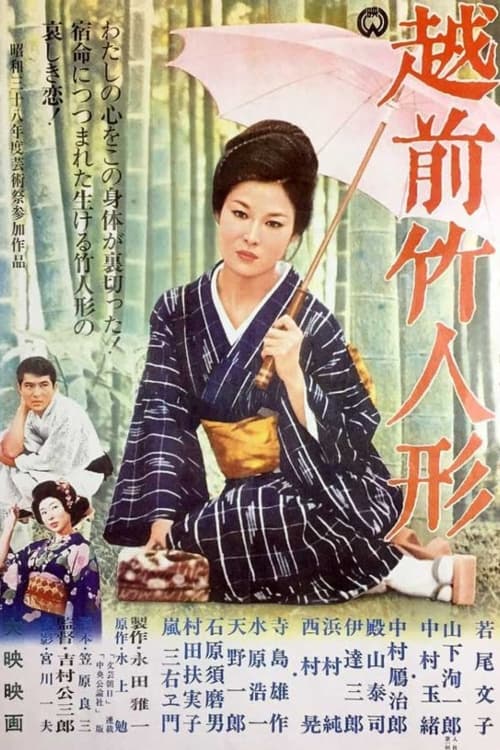
Bamboo Doll of Echizen
1963
No user ratings available yet
Diversity score: 4.1 out of 10

1951
Director
Kōzaburō Yoshimura
Runtime
124 minutes
Average Rating
No ratings yetSynopsis
Genji, the illegitimate offspring of a Japanese potentate, goes by the philosophy of "love 'em and leave 'em" as a matter of course. Only when his heart is broken by Awaji does Genji realizes how much pain he himself has caused.
Overall Score
Limited
Category Breakdown
LGBTQ+ Representation
The film operates within a strictly heteronormative framework. The narrative focuses on polygamous marriage structures and romantic entanglements without exploring non-cisnormative identities.
Gender Representation
Women navigate a highly stratified patriarchal system. While they exercise social influence and emotional intelligence, their agency is largely confined to influencing the men around them.
Racial & Ethnic Diversity
The production maintains cultural authenticity by using Japanese actors for this Heian-era setting. However, the cast remains culturally homogeneous and lacks intersectional blending.
Religious & Cultural Diversity
The story is deeply rooted in Shinto and Buddhist frameworks. It emphasizes courtly etiquette and social order rather than critiquing traditional aristocratic institutions.
Disability Representation
There is no visible representation of physical disability, neurodivergence, or chronic illness. Characters are presented through a lens of idealized aristocratic perfection.
Strengths
Areas for Improvement
AI Analysis
Kōzaburō Yoshimura’s adaptation is a formalist exercise in historical reconstruction. It prioritizes the aesthetic and social hierarchies of the Heian period, adhering strictly to the classical literary source material. While the film succeeds in preserving the cultural values and religious philosophies of its era, it does so by reinforcing traditional power structures. The narrative lacks the subversion or intersectional complexity found in more progressive modern works. Ultimately, the film functions as a preservation of a historical status quo. It offers deep immersion into a specific epoch but provides little representation for marginalized identities or non-traditional social dynamics.
1963
1962
1985
1956
1934
1986
1961
1966
1956

1969
1932

2008
No reviews yet. Be the first to share your thoughts on this movie!
Use the rating form above to leave a star rating and optional review.