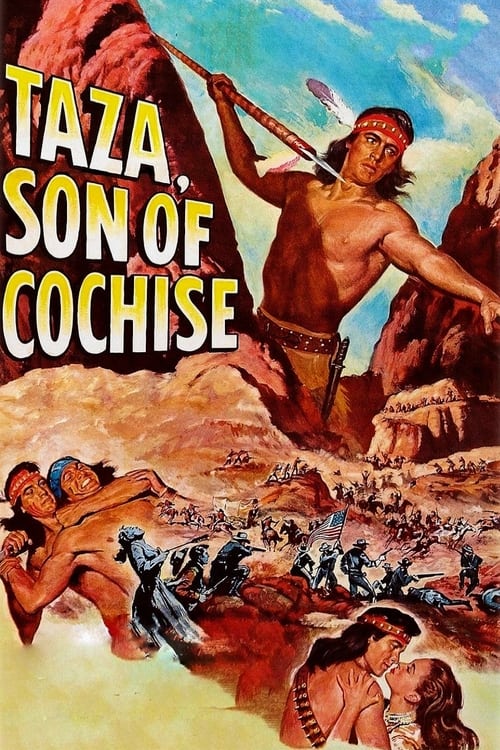
Taza, Son of Cochise
1954
No user ratings available yet
Diversity score: 5.1 out of 10

1951
Director
Hugo Fregonese
Runtime
75 minutes
Average Rating
No ratings yetSynopsis
A gambler is thrown out of a western town, but returns when the town is suddenly threatened by a band of marauding Apaches.
Overall Score
Fair
Category Breakdown
LGBTQ+ Representation
The film adheres to the heteronormative social structures of 1951. No queer narratives or non-cisnormative identities appear within the character arcs.
Gender Representation
The narrative focuses on masculine-driven warfare and tribal leadership. Women are relegated to secondary, domestic roles with little agency in the central conflicts.
Racial & Ethnic Diversity
The film shifts away from a purely Eurocentric perspective by prioritizing the Apache experience. It challenges typical caricatures by presenting the tribe as a complex group.
Religious & Cultural Diversity
The story critiques Western expansionism by portraying the U.S. Cavalry as an oppressive force. It explores the tension between tribal sovereignty and federal authority.
Disability Representation
There are no prominent depictions of visible or invisible disabilities in the film.
Strengths
Areas for Improvement
AI Analysis
Apache Drums functions as a work in transition, disrupting the standard Western tropes of the early 1950s. While it remains limited by the era's gender and LGBTQ+ norms, it offers a rare systemic critique of imperialist policy. The film humanizes the displaced Apache population rather than treating them as mere obstacles. By framing the U.S. military as an antagonistic entity, the narrative engages in a primitive form of post-colonial critique. Despite the era's casting limitations, the film elevates its thematic diversity. It centers the Apache struggle, providing a more nuanced view of racial and cultural dynamics than many of its contemporaries.
1954
1966

1955
1966
1950

1955
1954

1975

1956

1961

1967
1968
No reviews yet. Be the first to share your thoughts on this movie!
Use the rating form above to leave a star rating and optional review.