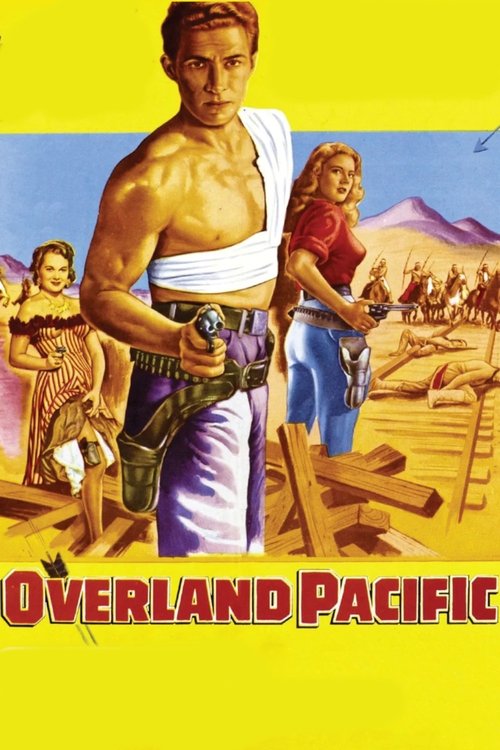
Overland Pacific
1954
No user ratings available yet
Representation score: 1.5 out of 10
Representation Score
Minimal
1955
ApprovedDirector
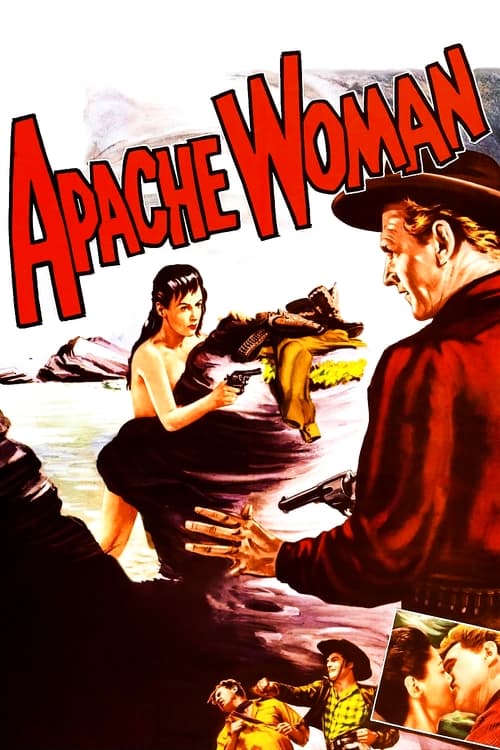
Roger Corman
Runtime
79 minutes
Average Rating
No ratings yetNew Showbiz Analysis
Apache Woman is a classic 1950s B-movie that focuses on genre clichés over social complexity. While it centers indigenous characters, the use of whitewashed casting weakens its attempt at ethnic representation. The film’s structure reinforces mid-century social hierarchies. The female protagonist is often defined by her captivity, limiting her role in driving the story. She serves more as a focal point for genre tension than as a fully developed character. Ultimately, the film adheres to conventional Western clichés that reflect the expansionist views of its time. It lacks depth in representing multiple aspects of identity and fails to challenge colonialist narratives.
Category Breakdown
The film does not include any LGBTQ+ characters or explore non-cisgender identities. It stays within a traditional framework that doesn't offer any queer representation or hints at diverse sexualities.
Despite featuring an Apache woman as the main character, the narrative upholds traditional gender roles. Her role is often constrained by her status as a captive, limiting her influence over the story.
The film deals with the Apache Wars but uses whitewashed casting. The lead Apache character is played by a white actress, which reinforces colonial stereotypes rather than offering authentic representation.
The story follows typical frontier conflict themes without challenging Western institutions. It portrays historical struggles through a conventional lens that emphasizes conflict and expansion.
There are no significant representations of visible or invisible disabilities. None of the characters have arcs defined by neurodivergence or physical impairments.
Present on Screen
Limited or Absent
Official Synopsis
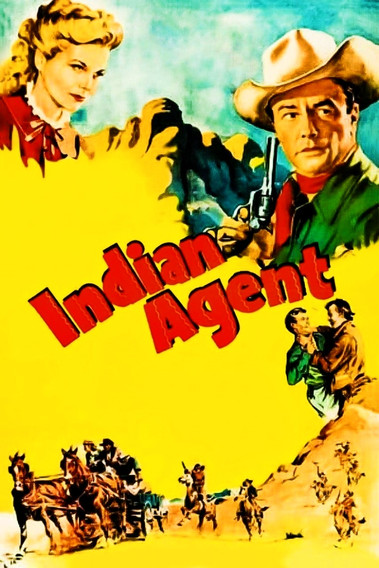
A government agent ventures west to look into reports that Apaches are behind a recent wave of frontier attacks. Begins to suspect a set-up.
1954

1966
1961
1948
1954
1958
1964
1952
No reviews yet. Be the first to share your thoughts on this movie!
Use the rating form above to leave a star rating and optional review.