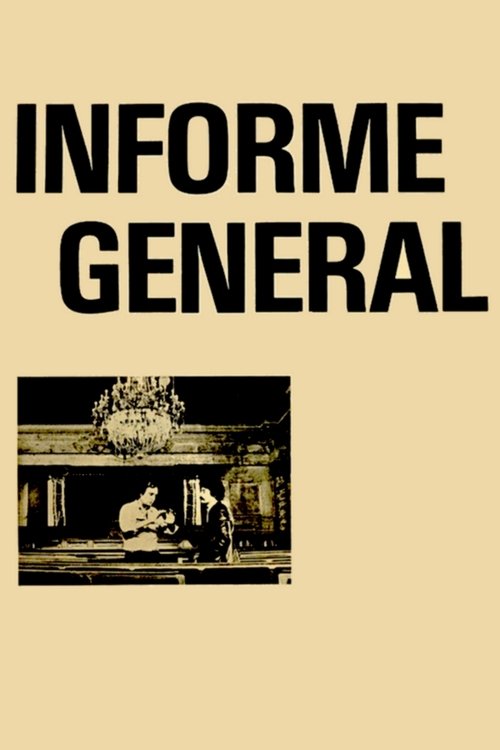
General Report
1977
No user ratings available yet
Diversity score: 5.8 out of 10

1972
Director
Pere Portabella
Runtime
85 minutes
Average Rating
No ratings yetSynopsis
This film turns on two basic axes: the inquiry into ways of cinematographic representation and a critical image of official Spain at the time of the Franco dictatorship. “Montage of attractions” and Brechtianism in strong doses. Umbracle is made up of fragments (some are archive footage) that resound rather than progress by unusual links, with dejá vu scenes that promise us more but remain tensely unfinished. Jonathan Rosembaun said: “few directors since Resnais have played so ruthlessly with the unconscious narrative expectations to bug us”. Learning from the feeling of strangeness caused by Rossellini as he threw well known actors into savage scenery in southern Europe. Portabella makes Christopher Lee wander around a dream-like Barcelona. Without a doubt Portabella’s most structurally complex and most profoundly political film, that is ferociously poetic.
Overall Score
Fair
Category Breakdown
LGBTQ+ Representation
The film's fragmented, non-linear architecture disrupts heteronormative narrative progression by eschewing traditional romantic arcs. However, the score remains moderate due to a lack of explicit, verifiable character-driven queer narratives.
Gender Representation
By prioritizing a montage of attractions over a cohesive story, the film prevents the establishment of traditional masculine leadership or submissive feminine archetypes. This structural fragmentation effectively neutralizes standard patriarchal tropes.
Racial & Ethnic Diversity
The film focuses on the urban textures of Barcelona during the Franco dictatorship. There is insufficient evidence to confirm a non-white majority cast or specific intersectional casting choices.
Religious & Cultural Diversity
The film excels in its critique of traditional Western institutions and the Franco dictatorship. Its postmodern montage deconstructs official Spanish history, favoring subjective truth over state-sanctioned morality.
Disability Representation
The film’s experimental and documentary-hybrid nature focuses on urban landscapes and cinematic inquiry. There is no specific evidence regarding the portrayal of physical or neurodivergent disabilities.
Strengths
Areas for Improvement
AI Analysis
Umbracle is a work of cinematic deconstruction that prioritizes systemic critique over individual identity politics. It uses a Brechtian 'montage of attractions' to challenge the monolithic cultural narratives of the Franco era. While the film lacks high-density representation of specific marginalized groups, it achieves progressive value by disrupting the social order. Its strength lies in subverting the status quo through structural fragmentation rather than character-driven storytelling. Ultimately, the film functions as a political inquiry, using experimental techniques to dismantle the institutionalized stability promoted by the regime.
1977
1974
1982
1961
2023
2003
2013
1972
2007
2014
1937

1968
No reviews yet. Be the first to share your thoughts on this movie!
Use the rating form above to leave a star rating and optional review.