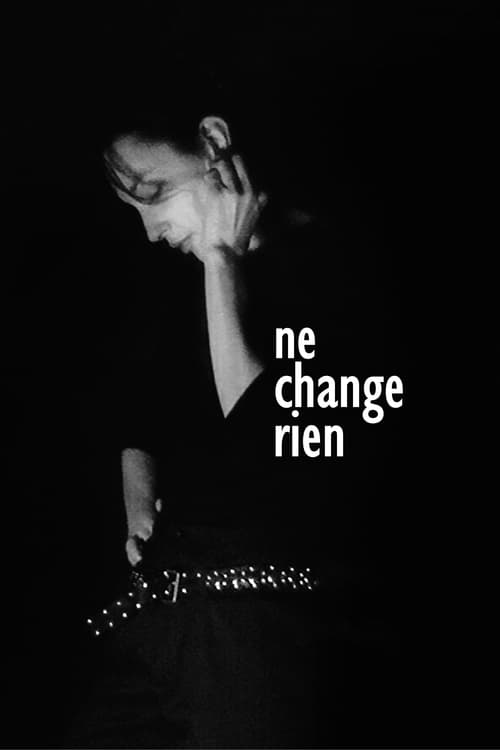
Change Nothing
2009
No user ratings available yet
Diversity score: 6.1 out of 10
2003
Director
Pedro Costa
Runtime
104 minutes
Average Rating
No ratings yetSynopsis
Undaunted by a commission to make a film about his mentors and aesthetic exemplars, the filmmaking team of Jean-Marie Straub and Danièle Huillet, Costa records with great sensitivity and insight the exacting process by which the two re-edit their film Sicilia!, discussing and arguing over each cut and its effect. Incorporating comments about the influence of figures as diverse as Chaplin and Eisenstein, about the ethical and aesthetic implications of film technique and such matters as rhythm, sound mixing, and acting. The film becomes a tour de force, immersing us in the mysteries of cinema as practiced by some of its greatest creators. Costa calls the film both his first comedy and his first love story.
Overall Score
Fair
Category Breakdown
LGBTQ+ Representation
The film functions as a meditation on aesthetic philosophy rather than a narrative exploring sexual identity. It lacks explicit LGBTQ+ characters or romantic arcs, though its focus on non-normative ways of seeing provides a subtle intellectual framework.
Gender Representation
The narrative highlights a non-traditional gender dynamic by documenting the intellectual partnership of Straub and Huillet. It subverts the 'lone male auteur' trope by presenting Huillet as an equal technical and intellectual collaborator.
Racial & Ethnic Diversity
The film operates within a predominantly Eurocentric intellectual tradition, focusing on European cinematic masters. While it critiques the ethics of the image, it lacks a diverse cast or non-Western centricity.
Religious & Cultural Diversity
The film prioritizes secular, philosophical inquiry over religious or nationalist narratives. It challenges commercial filmmaking standards by favoring a rigorous, deconstructive approach to the mysteries of cinema and moral relativism.
Disability Representation
The film does not feature characters or subjects whose narratives are defined by physical or neurodivergent disabilities.
Strengths
Areas for Improvement
AI Analysis
Pedro Costa’s documentary offers a sophisticated look at the creative process, prioritizing intellectual labor over demographic breadth. It succeeds in disrupting traditional cinematic hierarchies by showcasing a symbiotic, collaborative partnership between filmmakers. However, the film remains rooted in a Eurocentric tradition. Its focus on technical and philosophical discussions regarding European masters limits its engagement with broader racial and ethnic diversity. Ultimately, the work finds its strength in its deconstructive values. It rejects commercialized storytelling in favor of a rigorous examination of the ethics of the image.
2009
2013
2010
2023
1997
1995
2012
2019
2011
1961
2015
2017
No reviews yet. Be the first to share your thoughts on this movie!
Use the rating form above to leave a star rating and optional review.