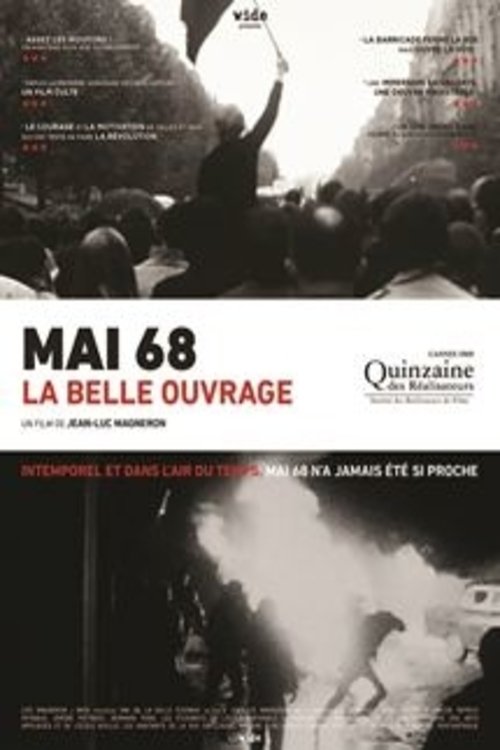
Mai 68, la belle ouvrage
1969
No user ratings available yet
Representation score: 5.6 out of 10

Representation Score
Good
1968
NRDirector
Jean-Luc Godard
Runtime
108 minutes
Average Rating
No ratings yetNew Showbiz Analysis
Jean-Luc Godard’s documentary serves as a systemic critique rather than a character-driven narrative. It utilizes a unique structure of identical imagery paired with differing narrations to dismantle the spectacle of mainstream cinema and institutional authority. The film's strength lies in its radical deconstruction of Western power dynamics and its embrace of situational ethics. By focusing on the social upheavals of May 1968, it mirrors the era's push to challenge established cultural and political norms. While the film excels at critiquing institutional structures, it lacks specific character-based data regarding individual identities. Its impact is found in its ideological framework and its disruption of traditional cinematic grammar.
Category Breakdown
The film explores the radical changes in social norms during the May 1968 period. Although specific LGBTQ+ character arcs are not detailed, the narrative environment critiques the stability of straight relationships.
Godard's approach challenges traditional patriarchal structures and the male gaze. The protests depicted involve a significant shift in established social roles and hierarchies.
The film focuses primarily on class-based solidarity among French students and workers. The ideological framework intersects with anti-colonialist sentiments and critiques of Western dominance.
The work emphasizes anti-capitalist narratives by documenting the 1968 uprisings. Its structure promotes moral relativism and challenges the idea of a singular, authoritative Western viewpoint.
There is insufficient evidence to assess the representation of physical or neurodivergent identities within this documentary framework.
Present on Screen
Limited or Absent
Official Synopsis
An analysis of the social upheaval of May 1968, made in the immediate wake of the workers’ and students’ protests. The picture consists of two parts, each with with identical image tracks, and differing narration.
1969
1961
1968
1965
1978

1968
1970
1970
No reviews yet. Be the first to share your thoughts on this movie!
Use the rating form above to leave a star rating and optional review.