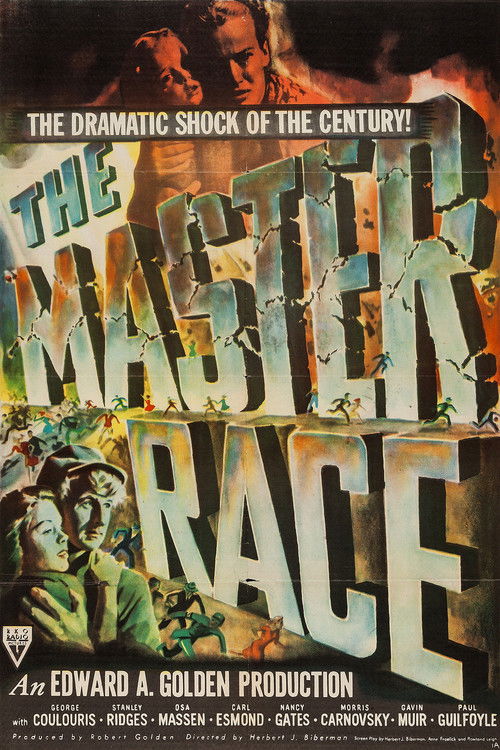
The Master Race
1944
No user ratings available yet
Diversity score: 3.7 out of 10

1949
Director
Grigori Aleksandrov
Runtime
104 minutes
Average Rating
No ratings yetSynopsis
Soviet and American soldiers are meeting on the shores of the Elbe river in Germany in 1945.
Overall Score
Limited
Category Breakdown
LGBTQ+ Representation
The film adheres to 1949 Soviet social norms. It lacks non-cisnormative identities or same-sex intimacy, focusing instead on masculine military camaraderie.
Gender Representation
Narrative agency is concentrated in male soldiers and military leadership. Female characters occupy secondary roles that do not challenge the established patriarchal structure.
Racial & Ethnic Diversity
Representation is limited to the racial demographics of mid-century Allied forces. The story emphasizes cooperation between Soviet and American military blocs.
Religious & Cultural Diversity
The film provides a strong critique of Western institutional norms. It celebrates Soviet state legitimacy and the dismantling of Nazi structures through a pro-communist lens.
Disability Representation
Characters with disabilities are not afforded agency. The narrative prioritizes physical strength and able-bodiedness as essential requirements for heroism.
Strengths
Areas for Improvement
AI Analysis
Meeting on the Elbe is a highly structured piece of state-aligned cinema. It prioritizes geopolitical identity and ideological messaging over individual intersectional representation. While it lacks modern diversity in gender, sexuality, and disability, it serves a specific cultural purpose. The film functions as a systemic challenge to Western-centric historical narratives. It replaces them with a framework of Soviet-led liberation and anti-capitalist sentiment. This makes the work a powerful tool for ideological promotion rather than a study of diverse identities.
1944
1984

1945

1976

1968

1970
1974

1956

1938
1959

1948

2011
No reviews yet. Be the first to share your thoughts on this movie!
Use the rating form above to leave a star rating and optional review.