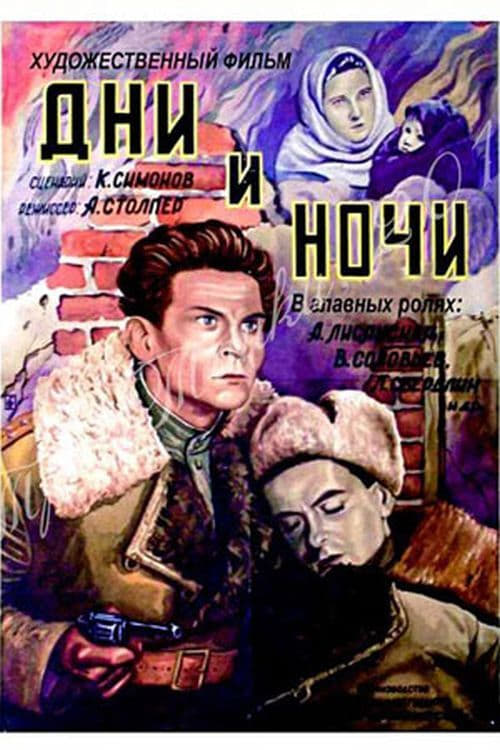
Days and Nights
1945
No user ratings available yet
Representation score: 3.5 out of 10
Representation Score
Fair
1945
Director
Fridrikh Ermler
Runtime
108 minutes
Average Rating
No ratings yetNew Showbiz Analysis
The film functions as a tool for ideological construction, emphasizing the collective over the individual. It excels in critiquing Western capitalism and depicting women as active contributors to society. However, it limits representation of LGBTQ+ identities and individuals with disabilities, and it frames ethnic diversity as a unified collective identity. Ultimately, the film measures progress through the rejection of religious and capitalist hierarchies rather than through the recognition of diverse individual identities.
Category Breakdown
The film adheres to traditional heterosexual relationships and does not include any non-straight or non-cisgender identities. It focuses on conventional dynamics to support the status quo.
Women are shown as capable and active in both labor and politics, rather than being confined to domestic roles. However, the story still centers around male leadership and traditional romantic plots.
The cast reflects the multi-ethnic makeup of the Soviet Union, presenting a unified collective identity. Non-Slavic characters lack individual ability to act and are overshadowed by the collective identity.
The film critically examines Western individualism and capitalism, emphasizing secularism and state-aligned atheism. It portrays socialism as the ultimate moral framework.
Characters with disabilities are not prominently featured. Physical or mental impairments are depicted as obstacles to be overcome by collective effort rather than as part of individual identity.
Present on Screen
Limited or Absent
Official Synopsis
The film tells the story of those who took part in the Battle of Stalingrad in 1942, which became a turning point in the Great Patriotic War. For five months, the city resisted the Nazi offensive. Surrendering Stalingrad to the enemy would have meant losing the war, but holding on to the city seemed almost impossible.
1945

1977
1945

1946
1976
1950
1943

1949
No reviews yet. Be the first to share your thoughts on this movie!
Use the rating form above to leave a star rating and optional review.