
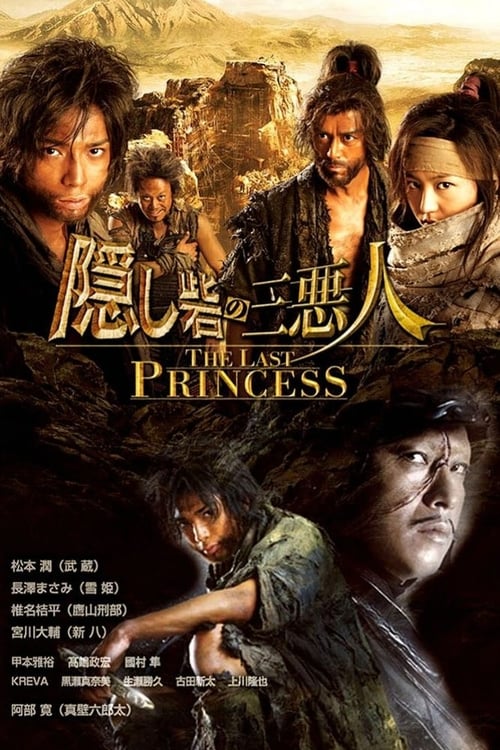
The Last Princess
2016
No user ratings available yet
Representation score: 6.9 out of 10
Representation Score
Limited
2008
Director
Shinji Higuchi
Runtime
118 minutes
Average Rating
No ratings yetNew Showbiz Analysis
The Last Princess is a historical adventure that prioritizes period authenticity and traditional storytelling over the subversion of social hierarchies. While it offers a degree of women's ability to drive the story through Yuki's tactical disguise, the narrative structure remains largely conventional. The film focuses on the friction between tradition and modernization within a homogeneous Japanese setting. It functions more as a character-driven survival drama than a critique of systemic power dynamics or identity politics. Ultimately, the work adheres to established genre expectations, centering on class-based adventure and straight-centered romance rather than diverse or non-normative representation.
Category Breakdown
The film follows a traditional romantic arc between Princess Yuki and Takezo, with no evidence of queer-coded characters or subversion of gender norms beyond Yuki's disguise.
Princess Yuki gains a significant role in driving the story by disguising herself as a man to navigate a male-dominated society. However, the story remains anchored in conventional romantic clichés.
Set in Meiji-era Japan, the film depicts a culturally homogeneous environment. It focuses on internal class and political dynamics rather than exploring multi-ethnic or characters who reflect more than one aspect of diversity.
The narrative explores the tension between imperial tradition and Meiji-era modernization. It highlights the contrast between the imperial elite and the commoner class.
There are no prominent depictions of visible or invisible disabilities that serve as central drivers for the characters or the plot.
Present on Screen
Limited or Absent
Official Synopsis
After the Akizuku clan fall in defeat to rival clan Yamana, Princess Yuki and General Rokurota take cover in a hidden fortress, along with their clan and gold treasury. Fortuitously stumbling into the hideaways, brash young miner Takezo and his bumbling sidekick Shinhachi hatch a daring plan to help transport the gold out of enemy terrain – in exchange for a share of the stash, of course. With assassins hot in pursuit, Yuki disguises as a male and ventures into the real world with Rukurota and her peasant companions, getting her first taste of danger, toil, and budding romance with the strong-minded and willful Takezo.
2016
1952
2003
1969
2019
2020
2017
1980
No reviews yet. Be the first to share your thoughts on this movie!
Use the rating form above to leave a star rating and optional review.