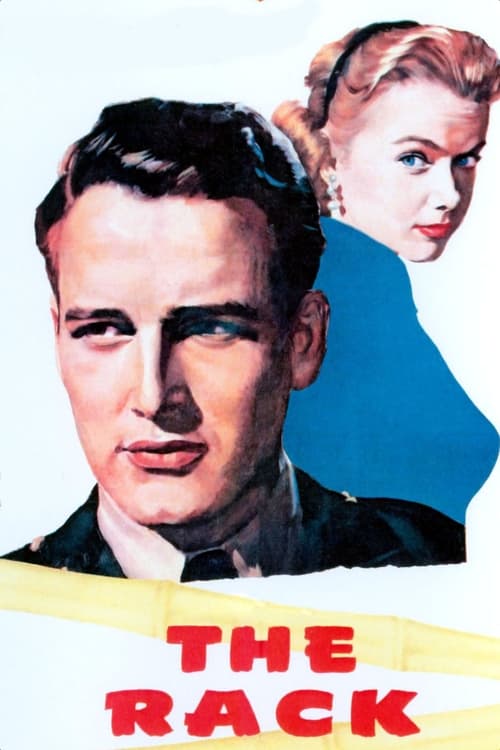
The Rack
1956
No user ratings available yet
Diversity score: 2.9 out of 10

1961
NRDirector
Delbert Mann
Runtime
108 minutes
Average Rating
No ratings yetSynopsis
Ira Hayes, a young Pima Indian, enlists in the Marine Corps. At boot camp, he is shunned and mocked by everyone, aside from a Marine named Sorenson, who he befriends. They happen to be two of the six marines captured in the famous photograph of Marines raising the U.S. flag on Suribachi during the battle of Iwo Jima, but Sorenson is killed soon after. Although he is hailed as a hero, Ira's life begins to spiral out of control after the war.
Overall Score
Limited
Category Breakdown
LGBTQ+ Representation
The film contains no LGBTQ+ characters or non-heteronormative narrative arcs. Interpersonal dynamics remain centered on traditional romantic and familial structures.
Gender Representation
The narrative explores dysfunctional maternal relationships rather than traditional domestic stability. However, the protagonist's struggle remains framed through a masculine lens of independence.
Racial & Ethnic Diversity
While centered on a Pima Indian protagonist, the character study focuses on a predominantly white, urban working-class milieu. There is a lack of intersectional casting within the central social circle.
Religious & Cultural Diversity
The film offers a sophisticated critique of Western social institutions and the justice system. It portrays the traditional family unit as a source of friction rather than stability.
Disability Representation
Psychological distress and social alienation are explored as character traits. The film avoids 'inspiration porn' but does not focus on specific disability advocacy or neurodivergence.
Strengths
Areas for Improvement
AI Analysis
The Outsider provides a gritty, naturalistic study of systemic failure and social alienation. It succeeds in deconstructing the perceived benevolence of state institutions and the stability of the nuclear family, offering a complex look at the human condition. However, the film lacks breadth in its representation of marginalized identities. The narrative focus remains heavily centered on male agency and a predominantly white social milieu, limiting its intersectional depth. Ultimately, the film's strength lies in its critique of social rehabilitation and the cycle of poverty, even as it misses opportunities for broader racial and queer representation.
1956
1959
1970
1965
1971
1958

2007
1962
1985
1959

2001
1965
No reviews yet. Be the first to share your thoughts on this movie!
Use the rating form above to leave a star rating and optional review.