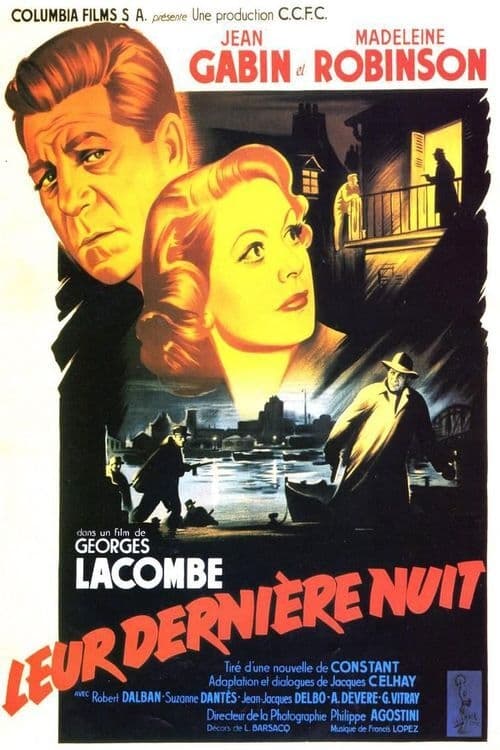
Their Last Night
1953
No user ratings available yet
Representation score: 1.9 out of 10
Representation Score
Minimal
1942
Director
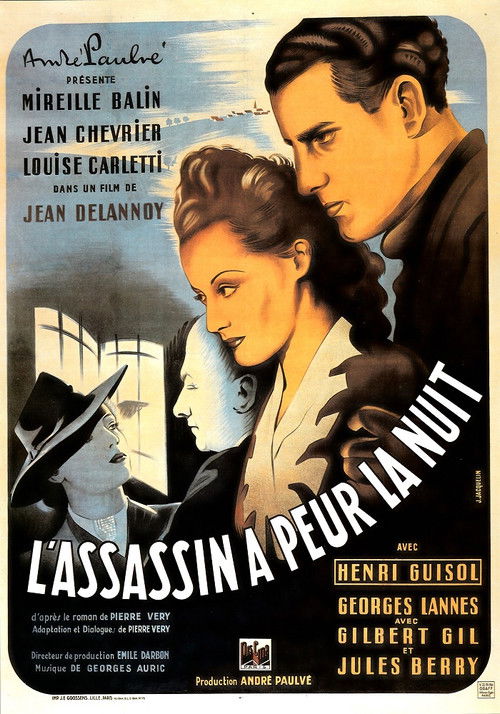
Jean Delannoy
Runtime
100 minutes
Average Rating
No ratings yetNew Showbiz Analysis
L'assassin a peur la nuit is a period-specific crime drama that emphasizes psychological tension and individual struggles over diverse representation. The narrative structure relies heavily on established genre clichés of suspicion and theft. The film adheres closely to the social and demographic norms of 1940s French cinema. It lacks the intentionality needed to disrupt conventional hierarchies or provide nuanced depictions of underrepresented identities. Ultimately, the story focuses on the protagonist's personal choices and conflicts rather than broader systemic or multi-layered themes.
Category Breakdown
The film focuses solely on heterosexual relationships and does not depict any non-cisgender identities or narratives that challenge traditional social structures.
Female characters like Lola and Monique play crucial roles but mainly serve as catalysts for the male protagonist's journey. While Lola takes action through blackmail, she remains entangled in male-driven conflicts.
The cast appears uniform, reflecting a typical Eurocentric depiction common in 1942 French provincial productions. There is no indication of diverse ethnic casting.
The narrative centers on individual morality and personal flaws without addressing systemic issues. It does not prioritize secularism or critique traditional social institutions.
There are no characters with visible or invisible disabilities. Disability is not used as a narrative device in this psychological thriller.
Present on Screen
Limited or Absent
Official Synopsis
Having pulled off a robbery with his friend Maurice, Olivier leaves his mistress Lola and hides out in a small village in the country. He finds work, thanks to a young man named Gilbert, who introduces him to his sister, Monique. Once the robbery has been all but forgotten, Olivier intends to head back to Paris, but before he goes, he steals money from his employer. In Paris, Olivier wants to say a proper goodbye to Lola, but she is being blackmailed by Jérôme, an antique dealer who has recognized a necklace stolen by Olivier. Before returning to Monique, Olivier calls on Jérôme to recover the necklace.
1953
1954
1955

1955
1985

1941

1942

1964
No reviews yet. Be the first to share your thoughts on this movie!
Use the rating form above to leave a star rating and optional review.