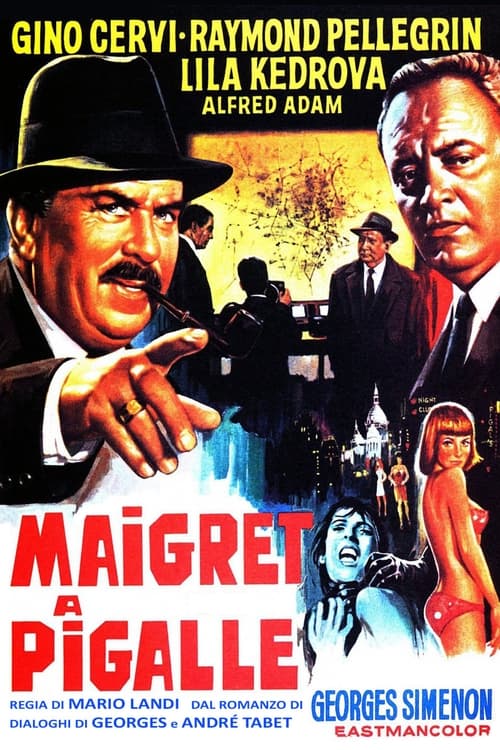
Maigret at the Pigalle
1966
No user ratings available yet
Representation score: 1.8 out of 10

Representation Score
Limited
1966
Director
Alfred Weidenmann
Runtime
89 minutes
Average Rating
No ratings yetNew Showbiz Analysis
Inspector Maigret is a classic mid-century European crime drama that prioritizes a clear procedural narrative over social exploration. The film focuses on the competence of its male protagonist within a stable, institutional framework. Since the production aligns closely with the demographic and social norms of 1966, it lacks representation across various diversity categories. The narrative upholds existing hierarchies rather than challenging them, resulting in a homogeneous cast and setting. Ultimately, the film serves as a period piece that reflects the era's standard cinematic language, offering limited diversity in character roles and perspectives beyond the central male figure.
Category Breakdown
The film follows a typical 1960s crime story format. It does not include any LGBTQ+ characters or themes that question the assumption that everyone is straight.
The story focuses on the masculine authority of Inspector Maigret. Female characters are shown in traditional mid-century roles and do not have the power to drive the main investigation.
The cast and setting appear mostly uniform, reflecting the demographics of 1966. There are no non-white characters in key roles.
The story emphasizes law and order using a Western perspective. It highlights the stability of institutional authority without engaging with diverse cultural viewpoints.
The film does not include characters with visible or invisible disabilities. Disability is not used as a theme in the story.
Present on Screen
Limited or Absent
Official Synopsis
After the theft of a priceless Van Gogh from a Parisian museum, Maigret follows his chief suspect to Lausanne where the suspect is found murdered.
1966

1946

1949

1979

1958

1958
1946

1953
No reviews yet. Be the first to share your thoughts on this movie!
Use the rating form above to leave a star rating and optional review.