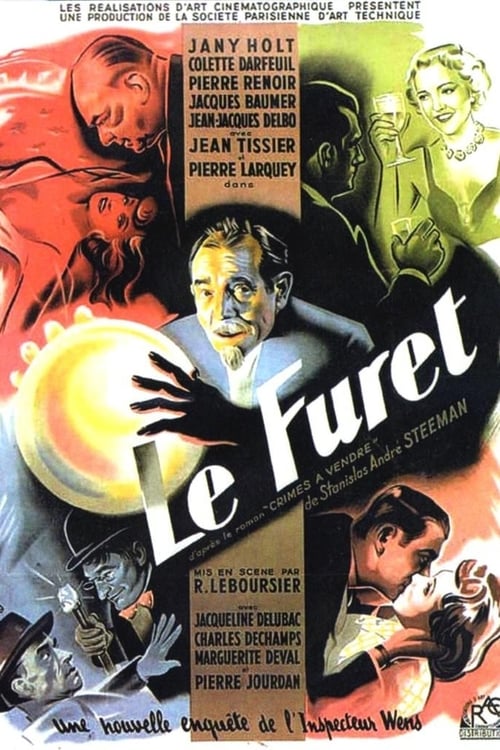
The Ferret
1950
No user ratings available yet
Diversity score: 2.6 out of 10

1932
ApprovedDirector
A. Edward Sutherland
Runtime
58 minutes
Average Rating
No ratings yetSynopsis
When a flower girl is kidnapped by a deranged White Russian, to impersonate the missing Princess Anastasia Romanoff while under his hypnotic spell, the French police attempt to solve the case with forensic method and the aide of a gentleman thief.
Overall Score
Limited
Category Breakdown
LGBTQ+ Representation
The film lacks LGBTQ+ characters or narratives. The plot follows conventional 1930s crime archetypes involving a flower girl and a kidnapper.
Gender Representation
Gender roles are traditional and hierarchical. The female protagonist is a vulnerable victim, while male police and a gentleman thief drive the investigation.
Racial & Ethnic Diversity
A 'White Russian' antagonist introduces ethnic identity through a common era trope. The casting appears to follow standard Western-centric norms of 1932.
Religious & Cultural Diversity
The story validates Western institutionalism and state authority. It focuses on French police and forensic methods to resolve social chaos.
Disability Representation
Psychological vulnerability is used as a melodramatic plot device via a hypnotic spell. This lacks nuanced portrayal of mental states or agency.
Strengths
Areas for Improvement
AI Analysis
Secrets of the French Police is a product of the early sound era, adhering strictly to the social hierarchies and storytelling tropes of 1932. The narrative relies on established archetypes, such as the vulnerable female victim and the foreign antagonist, to move the plot forward. Representation is limited by the era's standard studio system. The film reinforces traditional power dynamics, centering on male-driven law enforcement and institutional authority rather than exploring diverse perspectives or subverting social norms. Ultimately, the film functions as a conventional crime drama that prioritizes order and Western legal structures over nuanced character diversity.
1950
1935
1922
1930
1934

1949
1963
1930
1930
1929

1941
1903
No reviews yet. Be the first to share your thoughts on this movie!
Use the rating form above to leave a star rating and optional review.