
Tarzan and the Valley of Gold
1966
No user ratings available yet
Diversity score: 1.9 out of 10
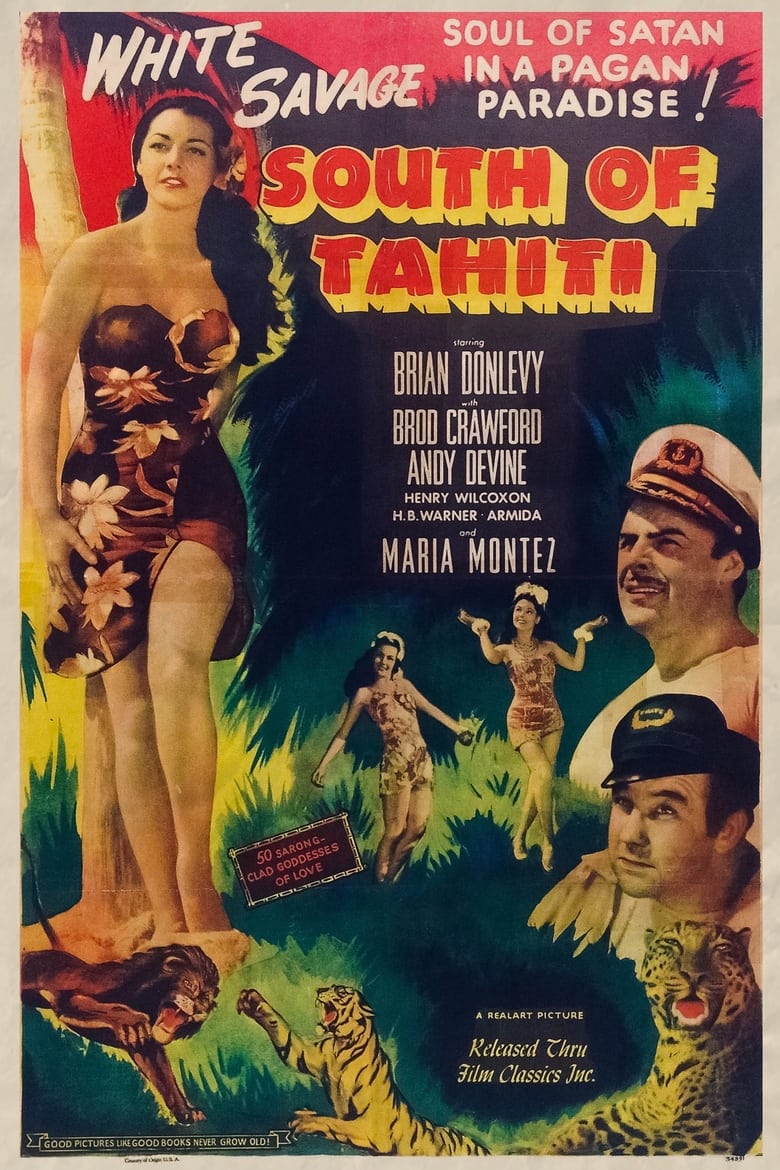
1941
ApprovedDirector
George Waggner
Runtime
78 minutes
Average Rating
No ratings yetSynopsis
Three men survive a plane crashes on an uncharted Pacific island, south of Tahiti. One falls in love with the the daughter of the tribe's leader, heiress to the throne after the death of her brother, who is as savage as her pet leopard. The others try to devise a plan to rob the tribe's gold.
Overall Score
Limited
Category Breakdown
LGBTQ+ Representation
The film lacks any depiction of non-heteronormative identities or same-sex intimacy. The central romance is strictly a heterosexual pairing between a male survivor and a tribal heiress.
Gender Representation
A female character holds significant structural power as a tribal heiress. However, her agency is tied to traditional tropes, serving largely as a romantic catalyst for the male protagonist.
Racial & Ethnic Diversity
The narrative relies on ethnographic stereotypes, framing the indigenous population through a lens of 'savagery.' The tribe serves primarily as an object for the protagonists' colonialist greed.
Religious & Cultural Diversity
The story follows mid-century Western adventure tropes where non-Western cultures are spaces for exploitation. The focus remains on the interests and survival of the Western protagonists.
Disability Representation
There is no mention of characters with visible or invisible disabilities in the narrative.
Strengths
Areas for Improvement
AI Analysis
South of Tahiti is a product of its era, adhering to the colonialist adventure frameworks common in 1941 Hollywood. The plot centers on Western survivors who encounter an indigenous tribe, creating a tension between romantic interest and material theft. The film reinforces traditional hierarchies by positioning the indigenous population as targets for exploitation rather than complex characters. While a female leader exists, her role appears constrained by romantic and lineage-based tropes. Ultimately, the narrative prioritizes the agency of the outsiders, using the Pacific setting as a backdrop for capitalist extraction and standard genre conflict.
1966
1951

1960
1927
1939

1968

1931

1936

1943

1946

1942

1933
No reviews yet. Be the first to share your thoughts on this movie!
Use the rating form above to leave a star rating and optional review.