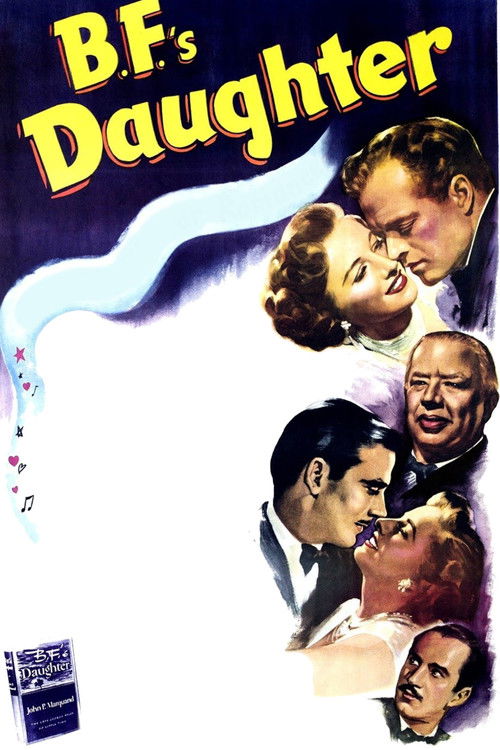
B.F.'s Daughter
1948
No user ratings available yet
Diversity score: 2.2 out of 10

1931
NRDirector
Robert Z. Leonard
Runtime
89 minutes
Average Rating
No ratings yetSynopsis
John owns the largest chain of five and ten cent stores in the country. He moves his family to New York from Kansas City and their life, though grand, is falling apart due to his constant working. Wife and mother Jenny is lonely. Son Avery hates his job. Daughter Jennifer is snubbed by classmate Muriel and her friends. At a charity bazaar, Jennifer meets Berry and sparks are evident. However, he is engaged to Muriel and Muriel will make sure that she, and only she, marries Berry. After the marriage, Berry still thinks of Jennifer as Jennifer thinks of Berry. Avery laments about the state of his family since they were happy in Kansas City.
Overall Score
Limited
Category Breakdown
LGBTQ+ Representation
The film follows a strictly heteronormative trajectory. Romantic tension is confined to the heterosexual connection between Jennifer and Berry, with no presence of non-cisnormative identities.
Gender Representation
While the story examines domestic friction caused by patriarchal economic structures, it largely reinforces 1930s gender roles. The narrative focuses on the emotional labor of the wife and daughter.
Racial & Ethnic Diversity
The film reflects the homogeneous casting norms of the early 1930s. It depicts a standard white, upper-middle-class social stratum without significant non-white or non-Anglo-Saxon presence.
Religious & Cultural Diversity
The story centers on capitalist success and the pursuit of the American Dream. It frames social struggles as personal domestic consequences rather than offering a systemic critique.
Disability Representation
There are no visible or invisible disabilities integrated into the character arcs. No characters are defined by disability within the narrative.
Strengths
Areas for Improvement
AI Analysis
Five and Ten is a quintessential product of the early sound era, prioritizing traditional romantic and socioeconomic hierarchies. The film functions as a conventional portrait of early 20th-century American life, adhering to the established social norms of its time. The narrative reinforces standard period tropes, particularly regarding class and gender. While it explores the fragmentation of a family due to wealth, it does so through a lens of personal domestic struggle rather than systemic subversion. Ultimately, the film lacks intersectional depth, offering a homogeneous view of society that centers on white, upper-middle-class experiences and traditional family structures.
1948

1936

1930

1932

1934

1931

1938
1931

1921
1933

1930

1933
No reviews yet. Be the first to share your thoughts on this movie!
Use the rating form above to leave a star rating and optional review.