The Devil's Holiday
1930
No user ratings available yet
Representation score: 1.9 out of 10
Representation Score
Minimal
1921
Director
Cecil B. DeMille
Runtime
87 minutes
Average Rating
No ratings yetNew Showbiz Analysis
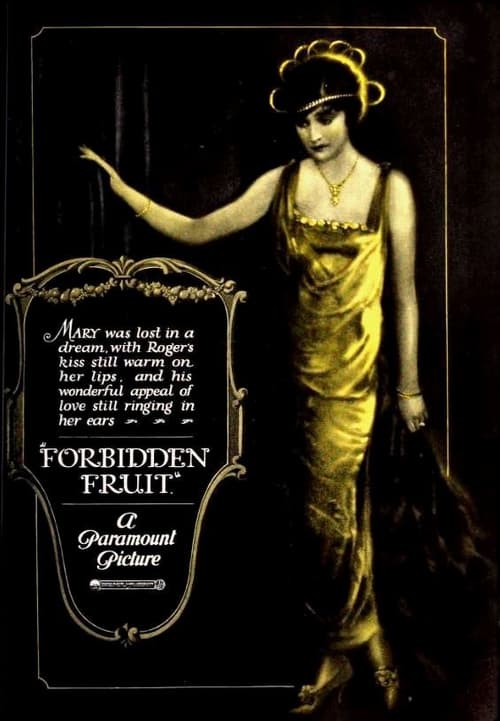
Forbidden Fruit is a period piece reflecting the social and moral standards of the early 1920s. The story centers on class differences and traditional romantic strategies, offering limited space for diverse viewpoints. While it highlights the disruption of the male provider role due to Steve's unemployment, its focus remains on the era's conventional social hierarchies. The film lacks intentional representation of underrepresented groups, emphasizing the conflict between personal desires and societal norms.
Category Breakdown
The film focuses solely on heterosexual relationships and class-based courtship. It does not include any non-cisgender identities or challenge the assumption that everyone is straight.
Mary Maddock uses her skills as a seamstress to gain economic independence, but the plot relies on her being used for romantic manipulation. The narrative reinforces traditional ideas about women's roles in the home.
The film shows a society where everyone looks the same, typical of the 1920s. There is no sign of non-white actors or animals representing diversity.
The story examines conflicts between workers and capitalists but stays within traditional moral frameworks. It does not offer a broader critique of Western institutions.
There are no characters with visible or invisible disabilities playing key roles or driving the plot.
Present on Screen
Limited or Absent
Official Synopsis
Mary Maddock works as a seamstress to bring home money while her husband Steve, unemployed, has no real prospects of earning money. Mary's employers, are trying to strike an oil related business deal with a rich man by the name of Nelson Rogers. The deal does not seem to be on the table, as Mr. Rogers is leaving town shortly and does not have the time to work out the details of such a deal. In an order to entice him to stay, Mrs. Mallory - wife of Mr. Mallory who is proposing the business deal - convinces Mary to be her guest at a dinner party with the intent of making Mr. Rogers fall for her and thus stay long enough for Mr. Mallory to make him agree to a business deal.
1930
1920
1926

1927
1931
1925

1927
1933
No reviews yet. Be the first to share your thoughts on this movie!
Use the rating form above to leave a star rating and optional review.