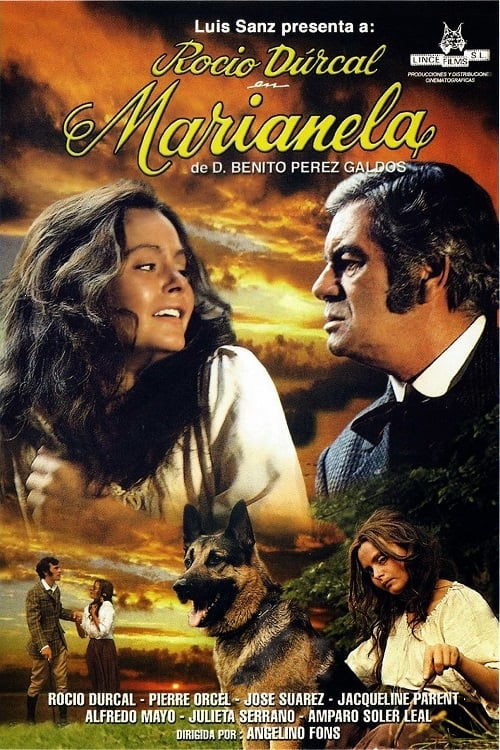
Marianela
1972
No user ratings available yet
Diversity score: 5.2 out of 10

1940
Runtime
87 minutes
Average Rating
No ratings yetSynopsis
Marianela is an orphan young girl living in a small village where she guides the blind young son of a rich country man. She is secretly in love with him, knowing that he loves her only because he can't see her ugly face. But one day a famous doctor appears and promises to operate him so he can see. His father is happy to know this way he will be able to marry his rich cousin. Nela gets desperate knowing his luck will turn into her disgrace when he finally sees her face.
Overall Score
Fair
Category Breakdown
LGBTQ+ Representation
The film contains no LGBTQ+ characters or non-heteronormative identities. Romantic tension is strictly confined to a traditional heteronormative framework between the leads.
Gender Representation
Marianela embodies the suffering female archetype common in mid-century melodrama. While she provides emotional guidance, her agency is limited by socioeconomic status and traditional expectations of vulnerability.
Racial & Ethnic Diversity
The setting is a culturally homogeneous Spanish rural environment. There is an absence of racial or ethnic pluralism, focusing instead on internal class distinctions.
Religious & Cultural Diversity
The narrative offers a nuanced critique of class-based capitalism and aristocratic inequity. However, religious undertones and a moralistic framework keep the score from being higher.
Disability Representation
Blindness serves as a fundamental lens for exploring morality and beauty. The film uses Pablo's disability to critique the superficiality of a sighted society.
Strengths
Areas for Improvement
AI Analysis
Benito Perojo’s adaptation of Galdós’s work is a social realist drama that prioritizes class struggle and physical perception. It succeeds in using disability as a sophisticated tool to challenge superficial societal standards, providing a meaningful exploration of inner versus outer beauty. However, the film is limited by its historical context, lacking racial pluralism and LGBTQ+ representation. The gender dynamics lean heavily on traditional tropes of female suffering and vulnerability within rigid social hierarchies. Ultimately, the film's strength lies in its critique of class structures and its nuanced handling of blindness, even as it remains rooted in the conservative spiritual and social traditions of 1940s Spain.
1972
1973
2014

1948
1946
1982

1951

1946
1957
2012
1959
1989
No reviews yet. Be the first to share your thoughts on this movie!
Use the rating form above to leave a star rating and optional review.