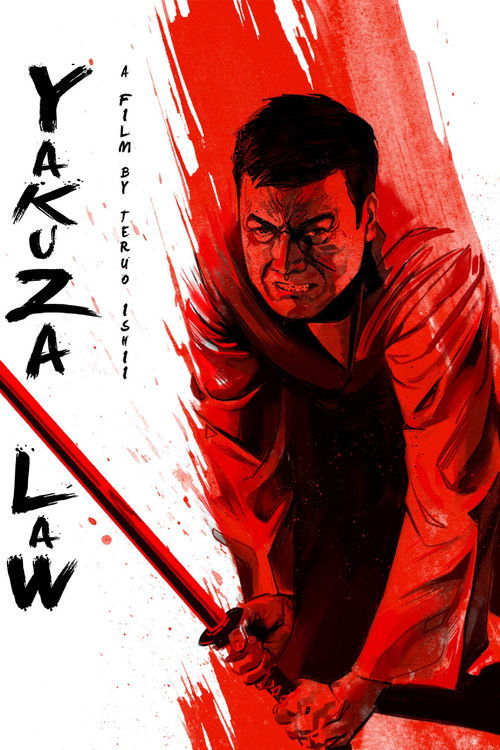
Yakuza Law
1969
No user ratings available yet
Representation score: 5.2 out of 10

Representation Score
Limited
1964
Director
Seijun Suzuki
Runtime
92 minutes
Average Rating
No ratings yetNew Showbiz Analysis
Seijun Suzuki’s crime drama primarily functions as a genre piece centered around romantic and social rebellion. Its strength lies in subtly subverting traditional yakuza clichés, shifting focus from strict institutional loyalty to individual autonomy. However, the film remains confined by the limitations of its time, presenting a culturally homogeneous perspective and a traditional romantic framework. It lacks diverse representation and does not explicitly address underrepresented identities. Ultimately, the work explores the clash between personal autonomy and rigid social structures, even if it does not fully meet contemporary diversity standards.
Category Breakdown
The story focuses on a heterosexual romance involving a yakuza member and a woman. There are no queer themes or non-straight identities in the narrative.
Initially, the female lead is a pawn in a marriage contract but gains independence by working as a waitress in Tokyo. She shifts from being a clan asset to an independent worker.
The film operates within a culturally homogeneous Japanese context. It lacks multi-ethnic casting but provides a localized perspective without a Western-centric viewpoint.
The film examines the tension between traditional yakuza hierarchies and modern urban life. It challenges rigid social obligations by emphasizing individual autonomy over clan loyalty.
The narrative does not provide any information or depiction of physical or neurodivergent disabilities.
Present on Screen
Limited or Absent
Official Synopsis
A young yakuza in love with the girl who's to marry his clan oyabun, kidnaps the girl before fleeing with her. In Tokyo, he hides under the identity of a worker while the young woman becomes a waitress in a restaurant.
1969

1964

1970

1967

1969
1963

1961
1976
No reviews yet. Be the first to share your thoughts on this movie!
Use the rating form above to leave a star rating and optional review.