Wife
1953
No user ratings available yet
Diversity score: 5.2 out of 10
1939
Director
Mikio Naruse
Runtime
65 minutes
Average Rating
No ratings yetSynopsis
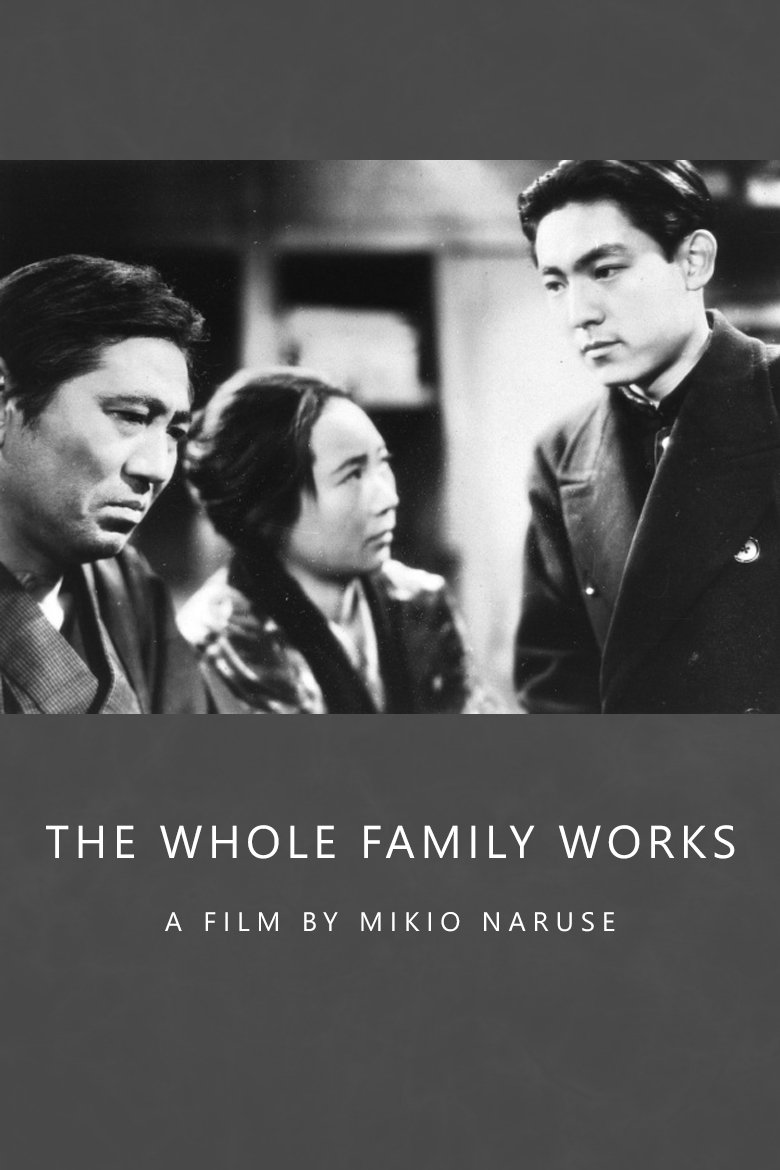
The Whole Family Works, Mikio Naruse's adaptation of a Sunao Tokunaga novel, feels more of a piece with the writer/director's quietly observant and psychologically charged later work. For the Naruse-familiar, it is an anomaly only in its placement within his filmography—indeed, this could be a film made by the elder, stasis-minded Naruse momentarily inhabiting, through a metaphysical twist of fate, his stylistically exuberant younger self. Set in depression-era Japan around the time of the Sino-Japanese War (which the director evokes, during a brief dream sequence, by dissolving between children's war games and actual adult warfare), The Whole Family Works gently observes a family coming apart at the seams. Ishimura (Musei Tokugawa) is the jobless father of nine children.
Overall Score
Fair
Category Breakdown
LGBTQ+ Representation
The film contains no evidence of LGBTQ+ characters or narratives addressing non-heteronormative identities.
Gender Representation
The narrative focuses heavily on the male labor force. However, the eldest son's decision to assert autonomy against parental wishes subverts traditional patriarchal hierarchies.
Racial & Ethnic Diversity
As a 1939 Japanese production, the film reflects a homogeneous cultural context. It serves as a localized study of class and social stratification.
Religious & Cultural Diversity
The story critiques traditional institutions by framing the family as an economic burden. It challenges the idealized portrayal of the family as a stable, purely positive unit.
Disability Representation
There is no information available regarding the depiction of physical or neurodivergent characters.
Strengths
Areas for Improvement
AI Analysis
Mikio Naruse’s drama offers a sophisticated look at the tension between individual agency and systemic domestic pressure. The film moves beyond simple melodrama to critique the cyclical nature of poverty and labor. While the cast lacks diverse racial or LGBTQ+ representation, the narrative architecture is progressive. It deconstructs the traditional family unit by centering the conflict on the struggle between collective survival and personal intellectual growth. Ultimately, the film challenges the conventional expectation of unquestioning adherence to familial and social hierarchies, making it a nuanced study of socio-economic constraints.
1953

1958
1954

1935
1958
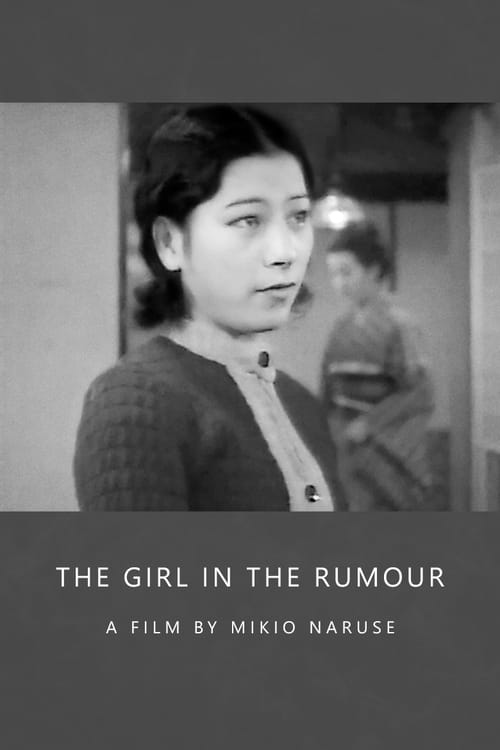
1935
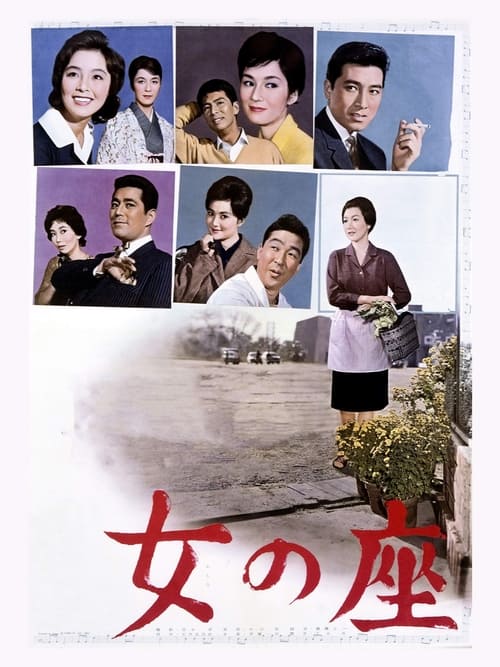
1962
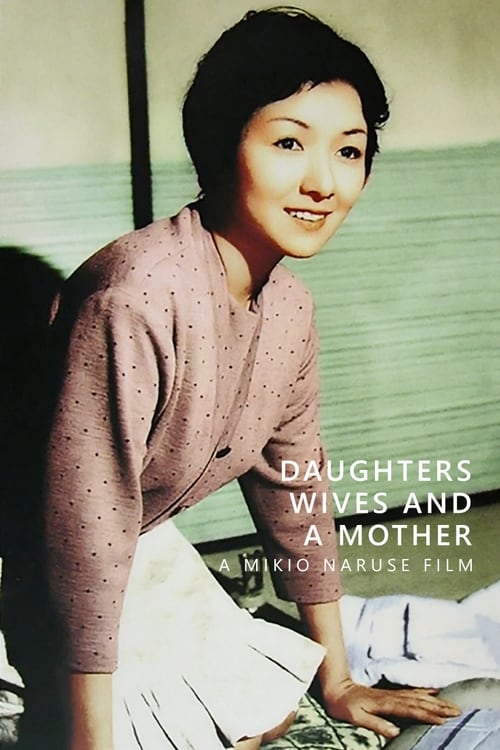
1960
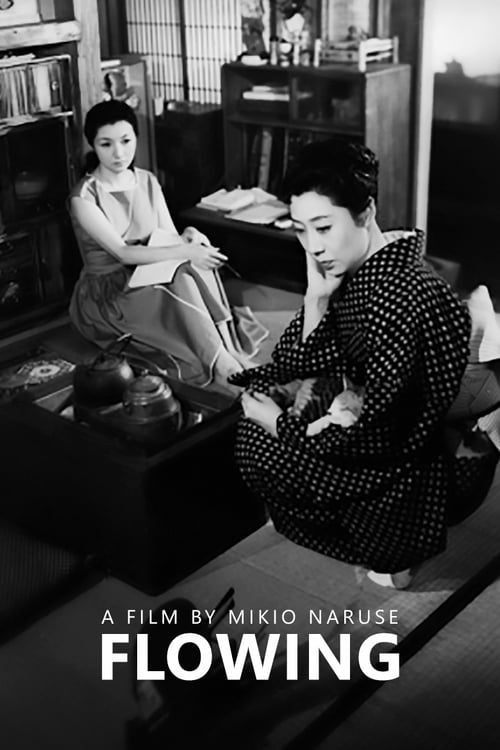
1956

1937

1951
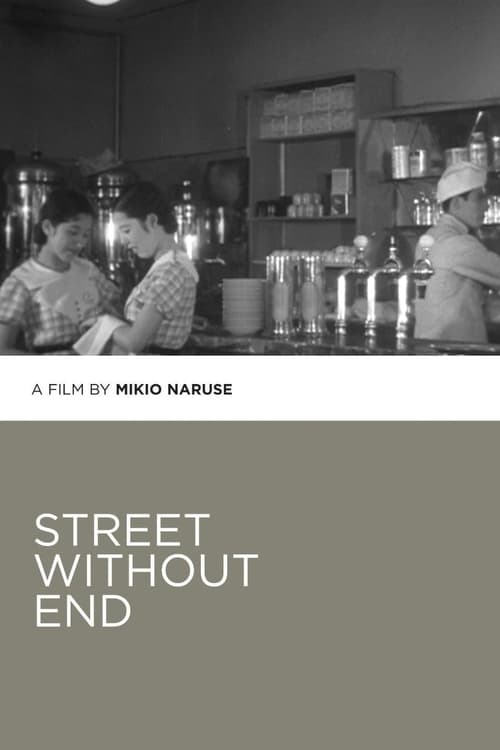
1934
No reviews yet. Be the first to share your thoughts on this movie!
Use the rating form above to leave a star rating and optional review.