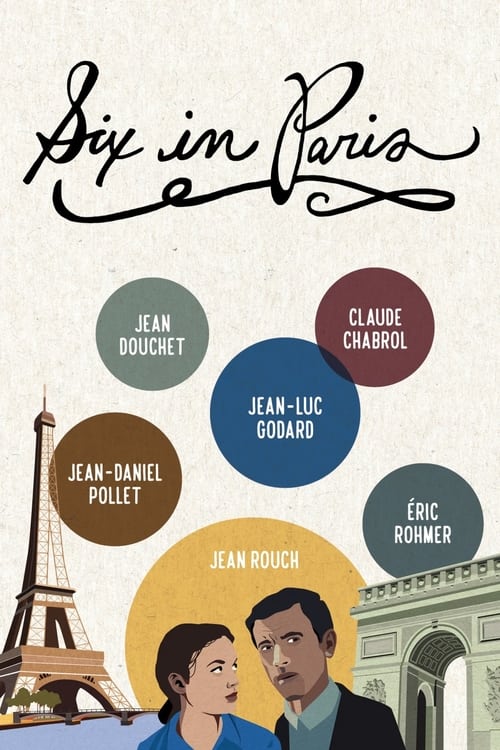
Six in Paris
1965
No user ratings available yet
Representation score: 3.8 out of 10
Representation Score
Limited
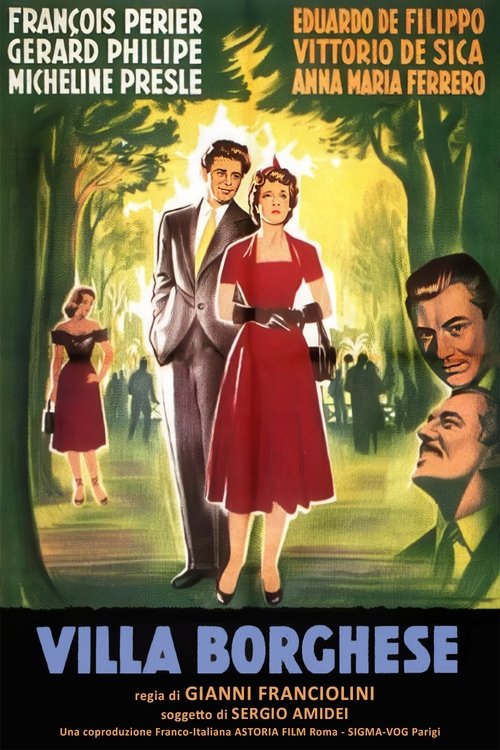
1953
Not RatedDirector
Gianni Franciolini
Runtime
93 minutes
Average Rating
No ratings yetNew Showbiz Analysis
Gianni Franciolini’s film is shaped by its specific historical and cultural context. It uses a vignette structure to explore local social interactions within Rome's Villa Borghese, sticking closely to the comedic frameworks of 1950s Italian cinema. The narrative does not aim to disrupt traditional hierarchies. Instead, it portrays a homogeneous demographic and ideological profile aligned with mid-20th century social norms. Ultimately, the film serves as a character study of urban life that celebrates established social structures without challenging them through diverse or multi-layered perspectives.
Category Breakdown
The film doesn't include any LGBTQ+ identities or same-sex relationships. It focuses on typical romantic misunderstandings and courtship scenarios from the 1950s.
Women play key roles in the emotional development of the vignettes but remain within traditional gender roles and social norms of the time.
The cast appears very uniform, reflecting the demographics of post-war Italy. There is no representation of diverse ethnic or minority groups.
The vignettes depict the traditional social fabric of Roman life. The film upholds contemporary social cohesion without critiquing Western institutions or family structures.
There are no characters with disabilities featured in the film. The narrative does not give any such characters significant roles or ability to act.
Present on Screen
Limited or Absent
Official Synopsis
Villa Borghese, Rome's biggest urban park, is the place where everyday laughs and dramas are consumed. The movie is made of six vignettes set there.
1965
1972
1950
1972
1953

2012

1954
1952
No reviews yet. Be the first to share your thoughts on this movie!
Use the rating form above to leave a star rating and optional review.