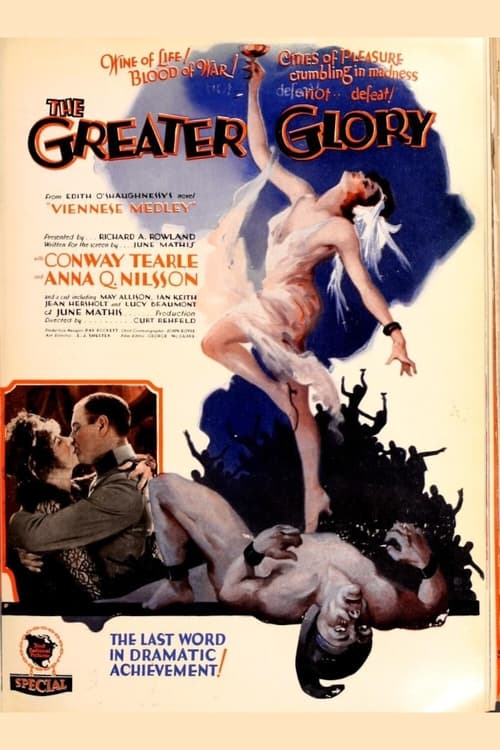
The Greater Glory
1926
No user ratings available yet
Representation score: 2.2 out of 10

Representation Score
Minimal
1926
PassedDirector
William K. Howard
Runtime
80 minutes
Average Rating
No ratings yetNew Showbiz Analysis
Gigolo is a product of its era, prioritizing the restoration of traditional economic and familial structures. The plot functions as a cautionary tale about female autonomy and the preservation of wealth, rather than an exploration of diverse identities. The film adheres to the social and cinematic conventions of the 1920s. It lacks representation of underrepresented groups, focusing instead on class, inheritance, and the consequences of individual impulse within a traditional framework. Ultimately, the narrative serves to reinforce established social hierarchies. It treats the breakdown of the family unit as a disruption that must be corrected by the male protagonist.
Category Breakdown
The film focuses on heterosexual relationships and traditional family dynamics. There is no indication of LGBTQ+ identities or subtext.
A strong female character drives the conflict, but the story ultimately reinforces traditional gender roles when the male heir restores order.
Set in Paris, the film likely reflects the homogeneous casting standards of 1920s Hollywood. There is no indication of diverse casting or racial blending.
The plot centers on Western values such as capitalism and family legacy. It treats the disruption of social stability as a problem to be resolved.
The narrative contains no mention of characters with physical, sensory, or neurodivergent disabilities.
Present on Screen
Limited or Absent
Official Synopsis
The heir to a family business travels to Paris to try to stop his youth-obsessed mother from squandering the family fortune with her new husband, who's married her for her money. After he returns from service in World War I, he finds his mother, now broke and abandoned by her gigolo husband....
1926

1942
1933

1925

1930

1923
1927

1944
No reviews yet. Be the first to share your thoughts on this movie!
Use the rating form above to leave a star rating and optional review.