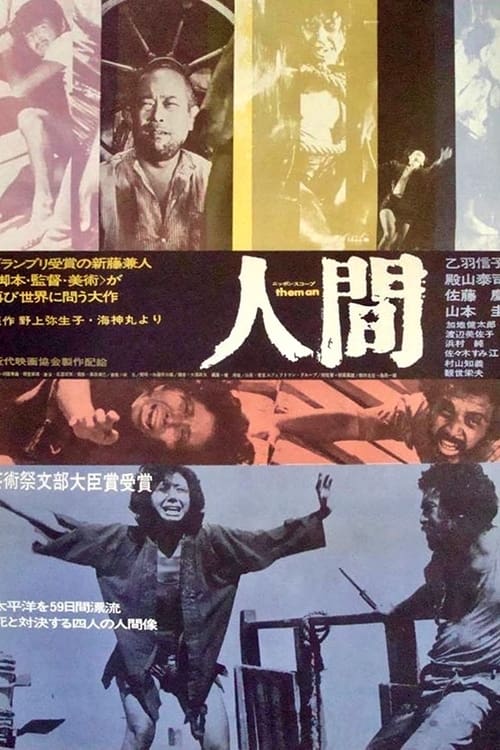
Human
1962
No user ratings available yet
Representation score: 8.1 out of 10

Representation Score
Fair
1960
Not RatedDirector
Kaneto Shindō
Runtime
97 minutes
Average Rating
No ratings yetNew Showbiz Analysis
Kaneto Shindō’s masterpiece is a visceral study of human survival that strips away social pretense. It succeeds by presenting women as essential, hardworking participants in a brutal environment rather than submissive figures. The film's strength lies in its ability to use a naturalist lens to critique systemic poverty. By centering the disenfranchised, it challenges conventional social hierarchies and explores how extreme scarcity reshapes morality. However, the score is limited by a lack of explicit identity-based representation. The narrative remains strictly focused on the biological necessities of a homogeneous family unit, offering no queer or perspectives that reflect multiple aspects of identity.
Category Breakdown
The film focuses solely on biological survival and the immediate needs of a family unit. There are no depictions of non-traditional gender identities or queer narratives within this realistic setting.
Women are shown as key players in the story, taking active roles in physically demanding tasks like seaweed harvesting. This highlights their resilience and active participation in a harsh environment.
The cast is ethnically uniform, reflecting a specific era of Japanese realism. It centers on a non-Western perspective, moving away from Western-centric cinematic formulas.
The story examines moral relativism in the context of survival, critiquing systemic poverty and challenging idealized notions of childhood through the lens of extreme scarcity.
None of the characters are defined by clinical disabilities. Instead, the film illustrates the physical and mental strain caused by the extreme conditions of subsistence living.
Present on Screen
Limited or Absent
Official Synopsis
A family of four are the sole inhabitants of a small island, where they struggle each day to irrigate their crops.
1962
1970
1939
1963
1957
1994
1959
1986
No reviews yet. Be the first to share your thoughts on this movie!
Use the rating form above to leave a star rating and optional review.