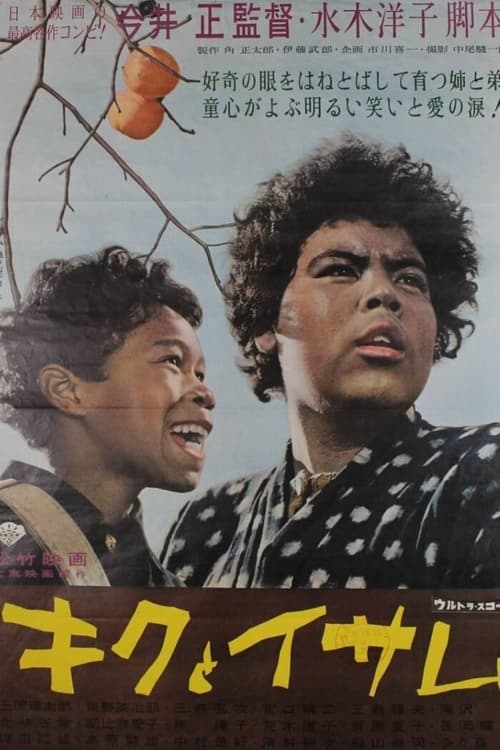
Kiku and Isamu: Two Siblings Born in Japan
1959
No user ratings available yet
Diversity score: 6.3 out of 10

1957
Director
Tadashi Imai
Runtime
118 minutes
Average Rating
No ratings yetSynopsis
A touching story depicting the harsh lives of farmers in Kasumigaura. An attempt to start a fishery business to revive an ailing farming community creates friction amongst the proud residents.
Overall Score
Limited
Category Breakdown
LGBTQ+ Representation
The film focuses on the preservation of traditional family units and agrarian lineage. There is no presence of queer subtext or non-heteronormative identities.
Gender Representation
Female characters provide essential emotional labor and domestic stability. However, their agency remains confined to the private sphere while men handle external economic disputes.
Racial & Ethnic Diversity
The cast is culturally homogeneous, reflecting a specific Japanese geographic context. It offers an authentic portrayal of its era without external imposition.
Religious & Cultural Diversity
The story explores the tension between traditional agrarian pride and new economic models. It critiques systemic poverty through the lens of social realism.
Disability Representation
There are no depictions of physical or neurodivergent disabilities used as central character traits or plot devices.
Strengths
Areas for Improvement
AI Analysis
Rice is a mid-century realist drama that prioritizes historical authenticity and the preservation of traditional social structures. It functions as a granular study of communal friction and socioeconomic pressure in rural Japan. The film excels at capturing the specific cultural and economic realities of the Kasumigaura region. It provides a grounded look at how poverty and shifting industries impact a tight-knit community. However, the narrative adheres strictly to 1950s social hierarchies. This results in limited representation for gender agency, LGBTQ+ identities, and disability, reflecting the era's cinematic conventions rather than diverse perspectives.
1959
1936
1957
1994
1942
1985
1940
1980
1963

1958
1951
1953
No reviews yet. Be the first to share your thoughts on this movie!
Use the rating form above to leave a star rating and optional review.